Toddler Singing in the Crib After Bedtime: Do You Go In?
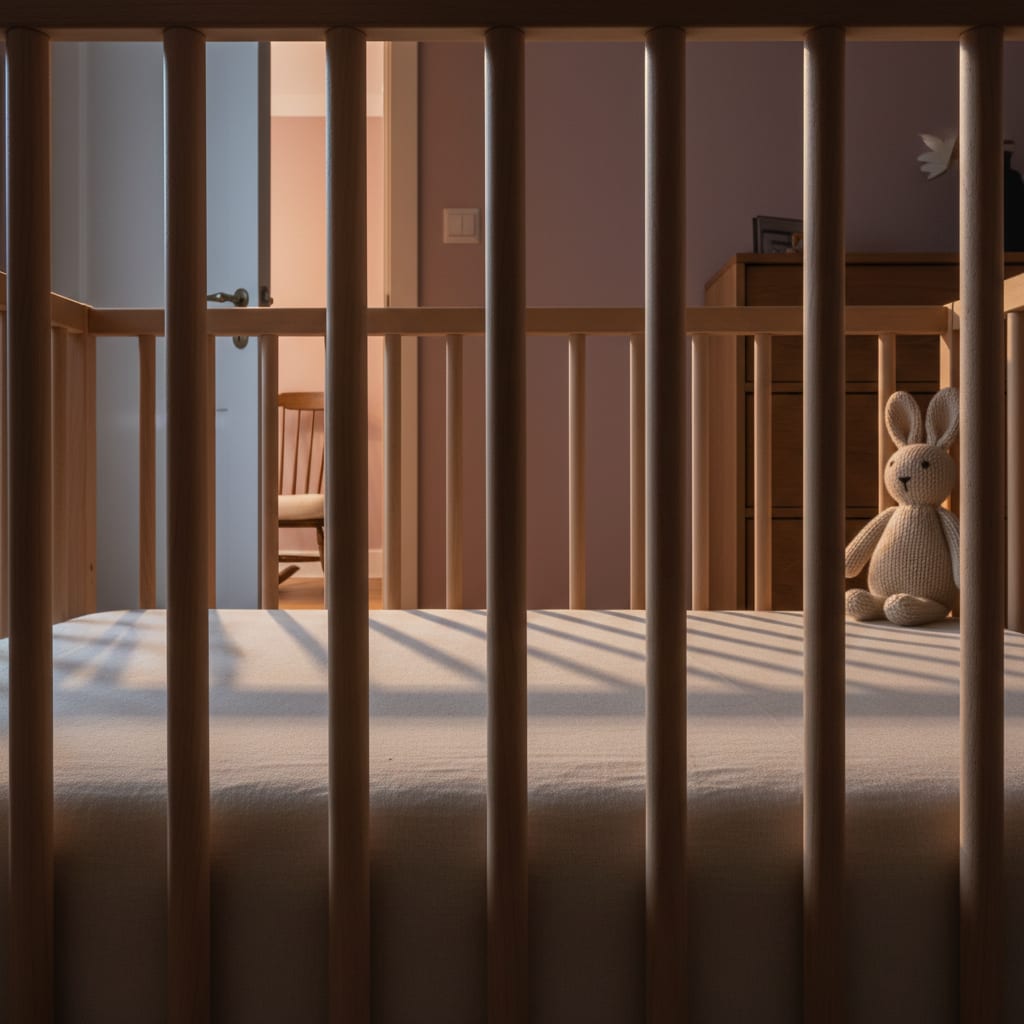
A toddler who sings, chatters or recites the day in the crib after lights-out is usually fine, and usually best left alone. Pre-sleep talk is common and well studied. If your child is content, safe and not calling for you, there is rarely a reason to go in. If it runs close to an hour every night and they’re cheerful the whole time, they’re probably not tired enough yet, which points at the nap or the bedtime. The harder part is usually yours: an evening on hold while you listen to the monitor.
What’s actually happening in there
There’s a name for this. Researchers call it “crib talk”: the pre-sleep monologue made by toddlers while in bed. It typically starts around 18 months and usually ends by two and a half, though some children carry on longer, and it can include word play, songs and nursery rhymes. Your child isn’t bored, and they aren’t stuck. They’re practicing.
The best-known recordings of it were made by a pair of Yale economists who noticed their two-year-old talked to herself after they left the room. They put a cassette recorder under her crib and taped her monologues from 21 to 36 months old. The tapes became an academic book, Narratives from the Crib, edited by the psychologist Katherine Nelson. The child was Emily Oster, now a Brown University economist and the author of Expecting Better and Cribsheet, and the 2006 edition of Narratives from the Crib carries a new foreword by her. According to her Wikipedia biography, analysis of the tapes found “her language was much more complex when she was alone than when interacting with adults.”
The singing coming through the monitor isn’t a failed bedtime. Some of the most complicated talking your child does all day may be happening right now, with nobody listening.
Why the singing is harder on you than on them
From the crib, this is a lovely time: lights low, nobody asking anything, an audience of one stuffed rabbit. From the couch, it’s different.
You did the routine. You said goodnight. In theory the evening has started: the hour you’ve been counting toward since about 3pm. But it hasn’t really started, because the monitor is on the arm of the couch and part of your attention is upstairs.
So you sit in a kind of half-shift. Not on duty, not off. You don’t start the show or run the bath, because you might have to go up. You listen for a change in the tone, and an hour passes in which you were neither resting nor doing anything.
Then the guilt joins in. Should I go in? Is she lonely? Did I do bedtime too early? Is this what all the other kids do? It’s a lot of thinking to spend on a child who is, by every sign, perfectly happy.
Should you go in? A short test
Most nights, three questions settle it.
Is it content or distressed? Singing, chatting, laughing, narrating: leave it. Crying that builds, calling for you by name, or a frightened tone are different, and a quick, calm check-in is reasonable.
Is it safe? Lying down or sitting while singing is fine. Standing and bouncing is usually fine. Climbing is a different matter. Vanderbilt’s children’s hospital lists signs it’s time to move from crib to bed, including being 35 inches tall, being “able to pull themselves up and over the crib rail”, or a top rail less than three-quarters of the child’s height. If the concert involves a leg over the rail, that’s a safety question, not a sleep one.
Is it aimed at you? Singing to themselves is self-entertainment. Calling out song requests to the door is a bid for company. The first needs nothing from you. The second you can answer from the doorway with your usual goodnight sentence, the same words every time, which is the approach that works for a bedtime that keeps stretching.
Going in to quiet a happy child can turn a private concert into a social occasion. A toddler who was drifting off can wake right up for an audience.
When an hour every night means bedtime is early
A song or two before sleep is just how some children settle. An hour of cheerful singing, night after night, is usually a timing signal.
Betteroo’s guide on how much sleep a two-year-old needs says a well-rested toddler typically falls asleep within about 15 to 30 minutes of bedtime, and that two-year-olds generally need about five to six hours awake between the end of the nap and lights-out. A long or late nap can shift bedtime later than the clock says. A child who naps until 3:30 and goes down at 7 may simply not be ready until 8.
The tell is the mood. A child who’s under-tired is cheerful about it; an overtired child is frantic. Overtired vs undertired has the full comparison, and if the nap is the likely culprit, when to wake a toddler from a nap covers setting a cut-off. For an older two- or three-year-old, a long cheerful stall at bedtime can also be an early sign the nap itself is on its way out. Betteroo’s piece on when children typically drop the nap puts it plainly: a child “cheerful at bedtime but not sleepy is probably ready.”
Move one thing, by fifteen minutes, and watch for a week.
Starting your evening anyway
Whatever the timing, the singing will happen some nights. The goal is to stop it from cancelling your evening.
Decide on a check-in time. Pick a time, say thirty minutes after lights-out, when you’ll listen properly. Before that, the monitor stays on and you don’t treat every pause as a decision.
Turn the volume to the right level. Loud enough to hear crying, quiet enough that a song isn’t a summons. You’re not ignoring your child. You’re filtering for the sound that needs you.
Start the thing anyway. Run the bath. Start the episode. Open the book. If you’re called upstairs, you pause it. Waiting for complete silence before your evening can begin means some nights it never does, which is the trap described in getting your evenings back.
Let it be sweet. Once you’re sure your child is fine, the singing can be what it sounds like: a small person, alone and safe, practicing a language.

A balanced word: no plan will stop a toddler who loves singing from singing. What a plan can do is tell you whether the hour is a timing problem or a personality, so you stop re-deciding it every night with your shoes still on.
One small thing this week
For five nights, note two things: when the nap ended and roughly when the singing stopped. That’s all. By Friday you’ll know whether the concert follows the nap, and whether to move a time or just make a cup of tea and let her sing.
FAQ: toddler singing in the crib
Is it normal for a toddler to sing or talk in the crib for an hour?
It’s very common for toddlers to talk, sing and play with words before sleep; researchers call it crib talk, and it’s typically seen from about 18 months to two and a half. An hour is on the long side. If it happens most nights and your child is cheerful, they may not be tired enough at bedtime yet.
Should I tell my toddler to stop singing and go to sleep?
Usually not. If they’re content and safe, going in often wakes them up more. If they’re calling for you, a short, calm, identical goodnight from the doorway works better than a conversation.
Does a toddler singing in bed mean bedtime is too early?
Sometimes. A cheerful, wide-awake child after 30 minutes or more, most nights, often points to a nap that’s too long or too late, or a bedtime that’s too early for their age. Adjust one thing by about fifteen minutes at a time and watch for a week.
When should I go in to a toddler who’s awake in the crib?
Go in if they’re distressed, calling for you persistently, unwell, or trying to climb out. A child who’s climbing over the rail may be ready for a bed, which is a safety question rather than a sleep one.
Three Good Reads
How to Stop Revenge Bedtime Procrastination as a Mom
How to stop revenge bedtime procrastination as a mom — why you scroll until 1am after the kids sleep, and how to get a real evening back instead.
July 17, 2026
Toddler Snoring and Teeth Grinding: Which Sounds Matter
A guide to the noises small children make at night — grunting, grinding, snoring, shouting — which ones are ordinary, and which one to raise with your doctor.
August 7, 2026
The 5-to-7 Handover: Surviving the Witching Hours
The last two hours before bed have three jobs — and knowing them changes the witching hour. What 5-to-7 should do for your child, and for the mother in it.
July 31, 2026