Baby Sleep and Marriage: Ending the 3am Resentment Spiral
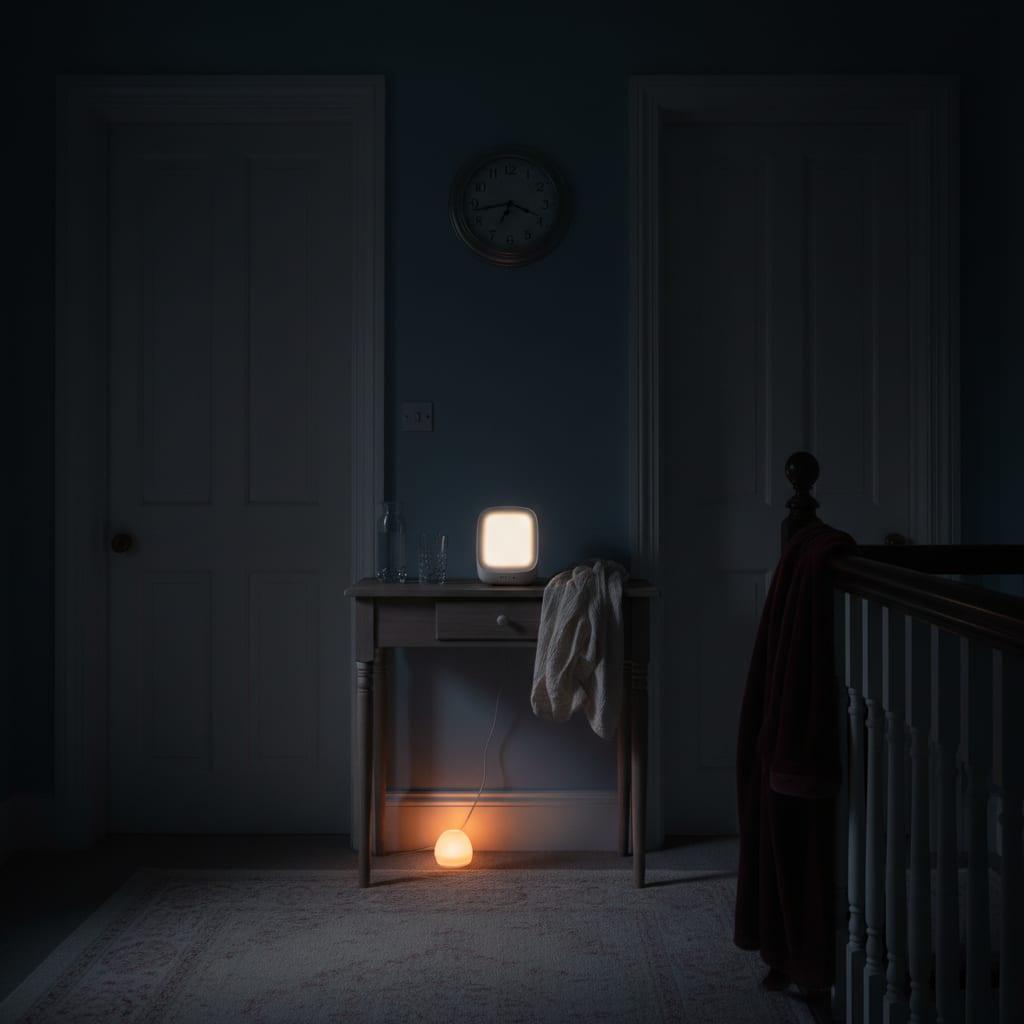
Baby sleep and marriage trouble arrive together so often because 3am is where scorekeeping is born: one of you gets up, itemizes the other’s stillness, and files it. The spiral runs on two fuels — genuine sleep deprivation, which strips the generosity out of both of you, and an unnegotiated night, where who-gets-up runs on default instead of agreement. Ending it takes both fixes: repair conversations held in daylight, where your real selves can attend, and a night whose terms both people actually agreed to and can see. Neither one works alone. Here’s the whole shape of it.
The ledger you keep in the dark
Nobody teaches you the 3am arithmetic; it comes installed. The baby cries, you’re vertical before you’re conscious, and somewhere between the hallway and the nursery the accounting begins: that’s four nights straight. He has a pillow over his head. He didn’t even twitch. By the 4am feed you’ve extended the audit to the whole marriage — the invisible work, the sighs, the Saturday he slept until nine. By breakfast you’re speaking in a tone you’d struggle to defend, and he genuinely doesn’t know why, because he was asleep for the entire prosecution.
I want to say plainly: the ledger isn’t madness, and it isn’t pettiness. Night care is real, grueling, uncredited labor, and if it’s landing almost entirely on you, the resentment is information, the way it always is — a signal that the deal you’re living was never actually negotiated. But the 3am version of the ledger is the worst possible edition: compounded, garnished with rage, and presented to a sleeping man who never heard the terms.
Why exhaustion writes the script
Here’s the mechanism worth understanding, because it changes how you read your own 3am mind. Sleep deprivation reliably does three things to a person: it shortens the fuse, it darkens interpretation — the ambiguous becomes the hostile, “he didn’t wake up” becomes “he doesn’t care” — and it makes everything feel permanent, so one bad night reads as this is my whole life now. Researchers who study sleep and conflict keep finding the same pattern: tired couples fight more, repair less, and read each other less accurately. Both of you, running on fragments, are operating with the empathy dialed down and the grievance dialed up.
Which means the 3am voice is not your truest self finally speaking. It’s your most depleted self, holding the mic because no one else is awake. The grievances often point at something real — but the script, the tone, the he doesn’t love you garnish? Exhaustion wrote those. You wouldn’t sign a contract at 3am. Don’t prosecute a marriage there either. The house rule that saved mine: nothing said or concluded between midnight and 6am counts. Log the complaint; try it again in daylight. If it’s still true at 10am, it deserves a real conversation. Most of it is still true — just half the size.
The repair conversations (daylight only)
Negotiate the night explicitly. The core fix is turning defaults into agreements. Script: “The nights are breaking me, and I’ve started keeping score, which I hate. Can we design the night on purpose — who’s on for what, and when — instead of it just being me because I’m home?” Maybe that’s shifts. Maybe it’s you-weeknights, him-weekends, or him owning the 5am stretch. The specific split matters less than the fact that it was chosen — resentment metabolizes agreements far better than defaults. And “I’m home all day” does not settle it: day work and night work are both work, and both people’s sleep counts.
Give the scorecard a retirement speech. Tell him it exists: “When I’m up alone at 3am, I keep score, and by morning I’m furious at a version of you who doesn’t know there was a trial. I don’t want to run that court anymore.” Confessing the ledger, rather than leaking it in sighs, is what invites an ally instead of a defendant.
Repair the mornings-after. Bad nights will still happen. The couples who don’t spiral have a morning ritual as small as: “Rough one. 2:30 and 4:15. I’m at about twenty percent today.” Said not as an invoice — as a weather report, so the day’s grace gets budgeted accordingly. And the off-duty partner’s line is even shorter: “You got up. I see it. I’ve got bedtime.” Being seen is most of what the 3am ledger was demanding anyway.
The other half: shrink the number of 3ams
Every repair conversation gets easier when the night itself gets kinder — fewer wakings, fewer trials. This is the unglamorous marriage advice nobody puts on anniversary cards: the state of your baby’s sleep is a marriage variable. If the nights are chaos because naps and bedtime are guesswork, some of that is fixable, and fixing it is couple work, not just baby care. This is the one place I’ll mention a tool: Betteroo is a personalized baby-and-toddler sleep app — it builds your child’s nap windows and bedtime and keeps adjusting them as they grow, for around $20 a month. It’s a tool, not magic; it won’t make a teething night disappear. But a fairer night starts with a plan both people can see: when the schedule lives in an app instead of in your head, the night stops being one more piece of invisible work only you carry, and “who’s on and when” becomes something you both can read instead of something you both assume.

One small thing this week: institute the daylight rule together — nothing concluded between midnight and 6am counts — and hold one ten-minute conversation, in actual sunlight, that begins: “Let’s design the night on purpose.”
FAQ: baby sleep and marriage
Why do my husband and I fight so much since the baby stopped sleeping?
Because sleep deprivation shortens fuses, darkens how you interpret each other, and weakens repair — while the unnegotiated question of who gets up breeds real resentment underneath. Most couples aren’t suddenly incompatible; they’re depleted and running the night on defaults nobody agreed to.
Is it normal to resent my husband for sleeping through the night?
Very common, and usually meaningful: it signals the night labor is unevenly split and was never explicitly negotiated. The fix isn’t feeling guilty about the resentment — it’s a daylight conversation that turns who-does-what at night into an actual agreement where both people’s sleep counts.
How do we stop fighting at 3am?
Adopt one rule: nothing said or concluded between midnight and 6am counts. Log the grievance, revisit it after 10am, and keep a tiny morning ritual — a plain report of the night received with acknowledgment, not defense. Daylight shrinks most 3am cases to half their size and settles the rest more fairly.
Can fixing the baby’s sleep really help our marriage?
It helps the conditions the marriage runs on: fewer wakings mean fewer 3am trials and more evening left for each other. It’s not a substitute for the repair conversations — an agreed, visible plan for the night and the scorecard’s retirement speech still matter — but rested people simply fight less and repair faster.
Three Good Reads

How to Stop Revenge Bedtime Procrastination as a Mom
How to stop revenge bedtime procrastination as a mom — why you scroll until 1am after the kids sleep, and how to get a real evening back instead.
July 17, 2026

Overtired vs Undertired: Reading the 5pm Signals
Overtired or undertired? The signals look alike at 5pm and lead opposite ways. How to tell them apart — and why the guessing costs the mom at home the most.
July 27, 2026

What Nobody Tells You About Being a Stay-at-Home Mom
Why being a stay-at-home mom is so hard: nine things nobody tells you — the loneliness, the missing edges, the boredom guilt and the money feelings, named.
August 11, 2026