Mom Rage: Why It Happens and What Actually Helps
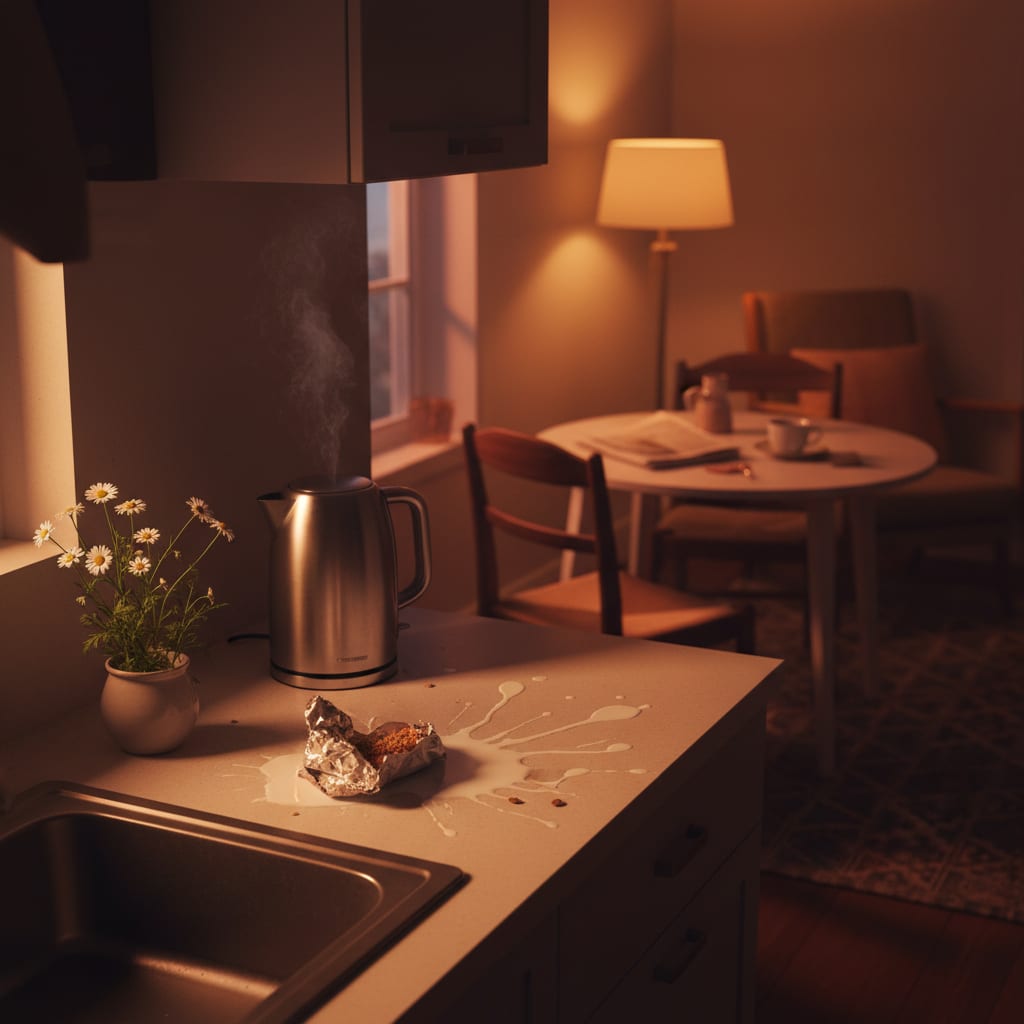
Mom rage is the sudden, outsized fury that erupts over something small — a spilled cup, a refused shoe, one more “mommy?” — and often frightens the very person feeling it. It doesn’t mean you’re a monster or a bad mother; it’s overload discharging, the predictable spark when exhaustion, overstimulation, and unshared load run through one nervous system for months. It responds to real things: catching the flare earlier, discharging the pressure on purpose, shrinking the load underneath — and honest help when it’s more than overload.
What a flare actually is
The scariest part of mom rage is the speed. You’re fine — tired-fine, normal-fine — and then you are incandescent, voice you don’t recognize, jaw tight, over a granola bar wrapper. Afterward comes the shame spiral: apologizing to a bewildered toddler, replaying it at 2am, googling in the dark.
Here’s the reframe that helped me most: the wrapper was never the cause. A rage flare is a discharge event — pressure that accumulated invisibly all day (all month) finding the first available crack. That’s why it’s disproportionate; it was never a response to the trigger, only routed through it. The pressure has ordinary names: an overstimulated nervous system treating every sound as threat, months of burnout with no recovery window, sleep that hasn’t been real sleep in years, and the simmering math of being the only one who knows the pediatrician’s phone number. Anger, as I keep having to relearn, is information: it’s the feeling that says something here is taking more than it’s giving back. The rage isn’t the problem. It’s the smoke alarm.
That framing isn’t an excuse — what our kids experience matters, and a house where the weather is unpredictable is scary for small people. But shame makes flares more frequent, not fewer. You cannot self-loathe your way to a calm nervous system.
The rage was never about the granola bar wrapper. The wrapper was just where the pressure found a crack.
In the moment: interrupting a flare
The window between spark and eruption is short, but it exists, and it widens with practice:
- Learn your two-seconds-before signal. Mine is jaw and shoulders; yours might be heat in the chest or a particular internal silence. The flare telegraphs. Knowing your tell buys you the exit.
- Get loud at nothing. The pressure is real and needs somewhere to go: growl into a pillow, turn on the faucet and let it run over your wrists, step onto the porch and exhale hard. Discharging at no one is not weird. It’s maintenance.
- Drop to a whisper. If you can’t leave, go quiet and slow on purpose. It’s nearly impossible to scream in a whisper, and the weirdness of it interrupts your own circuit (and often the toddler’s).
- Say the honest sentence. “Mommy is very frustrated and needs a minute” — then take the minute, kids safe, door closed. You’re modeling the exact skill you want them to have at four: big feeling, named, managed.
- Repair afterward, every time. “I yelled. That wasn’t okay, and it wasn’t your fault. I love you.” Repair doesn’t erase the flare, but it changes what the flare teaches. The guilt that follows closes its case faster after a real repair, too.
Underneath: shrinking the pressure itself
In-the-moment tricks are a lid. The pot matters more. The honest questions: When was your last real recovery window — predictable, protected, actually off? What’s your sensory load doing by 4pm? How much of the household’s thinking lives only in your head? Is any resentment simmering at a partner who “helps” but doesn’t own? Each of those has its own piece on this site, because each is its own upstream fix. Rage is usually the last symptom to arrive and the first to leave when the load drops — which is also why “just count to ten” advice insults everyone involved. Counting doesn’t empty a pot; it times the boil.
And the professional-help line, plainly: this post is lived experience, not a clinical anything. If the rage is frequent and doesn’t track with load, if it comes with hopelessness, numbness, or anxiety that never switches off, if it’s edging toward your kids physically, or if you’re scared of yourself — bring in a professional now, not after one more self-improvement sprint. Rage is a documented face of postpartum depression and anxiety, including well past the first year, and it’s treatable. Postpartum Support International: 1-800-944-4773 (call or text) — they support moms at every stage and can connect you locally. In crisis, call or text 988. Telling a doctor “I’m having scary anger” is a strong, common, unremarkable sentence in their office, I promise.
One small thing today: identify your two-seconds-before body signal by replaying your last flare. Just naming it — “jaw first, then heat” — puts a doorway where a wall was.
FAQ: mom rage
Is mom rage normal?
It’s extremely common — one of the most-shared experiences in modern-motherhood spaces — and it’s still a signal worth taking seriously. Think of it as normal the way a smoke alarm is normal: unremarkable to own, important to investigate when it keeps going off.
Why do I get so angry at my kids over small things?
Because the small thing is the trigger, not the cause. Accumulated pressure — sleep debt, sensory overload, invisible workload, no recovery time — discharges through whatever happens at the wrong moment. Disproportion is the signature of overload, not of bad character.
How do I stop mom rage in the moment?
Catch your body’s pre-flare signal, then break the circuit: leave for sixty seconds with kids safe, discharge at nothing (pillow, cold water, hard exhale), or drop to a deliberate whisper. Then repair with your child afterward — every time, briefly, without groveling.
When is mom rage a sign of something more?
If it’s frequent regardless of circumstances, paired with hopelessness, numbness or relentless anxiety, physically frightening, or simply scaring you — that’s the threshold. Talk to your doctor or a therapist; PSI (1-800-944-4773) and 988 are there meanwhile. Rage can be a treatable symptom, not a character sentence.
Three Good Reads

Affirmations for Moms Who Roll Their Eyes at Affirmations
Affirmations for moms who find affirmations embarrassing: why the standard ones backfire, what makes a sentence actually land, and 24 that survive scrutiny.
August 3, 2026

Cabin Fever With Kids: Why Winter Bedtimes Fall Apart
After a day stuck indoors, a restless winter bedtime is the day's missing movement and daylight arriving at 7pm. What helps them settle, and what helps you.
October 23, 2026
Toddler Wakes Up From Nap Screaming: What's Going On
Why a toddler wakes from every nap screaming and inconsolable, how it differs from a night terror, and a slow wake-up routine that makes the afternoon easier.
October 11, 2026