Moms Don't Get Sick Days: Being Ill as a Stay-at-Home Mom
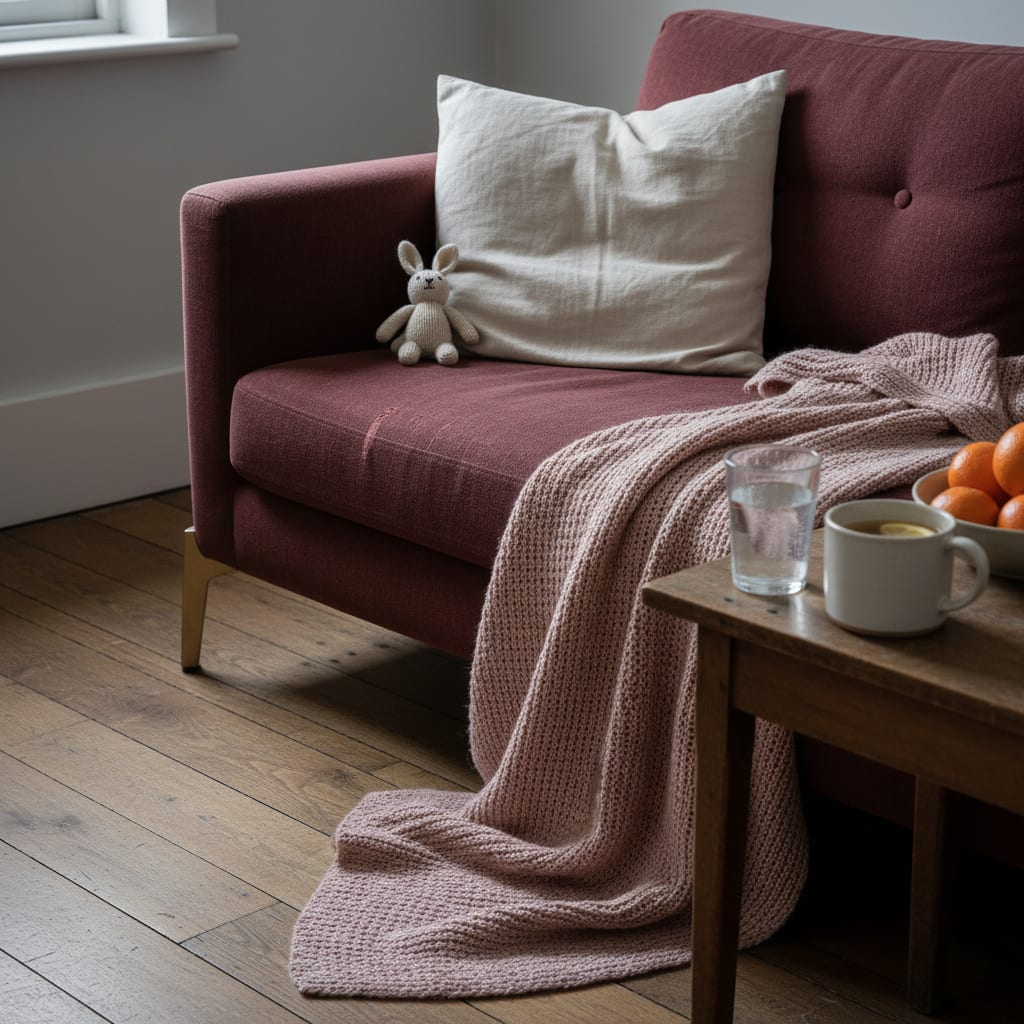
“Moms don’t get sick days” is a joke because it’s true. When you’re the parent at home, there is no one to call in to: the job is the children, and the children still need lunch whether you have a fever or not. What helps isn’t toughing it out. It’s treating your illness as a real absence that needs covering: asking your partner or someone else to cover actual hours, lowering the day to a survival standard on purpose, and dropping the screen guilt. A sick mom on a reduced day is not failing. She’s off sick.
The day nobody covers
Being ill at work comes with a process. You send a message, someone covers, and the work waits or moves. Being ill at home has no process at all. The alarm is a toddler. The handover is nobody. The work is a person who doesn’t care that your head is pounding.
The CDC’s advice when you have a respiratory virus is to “stay home and away from others (including people you live with who are not sick)”. That is sensible advice and almost funny when you read it with a two-year-old on your lap. You are home. That part is easy. Being away from the people you live with is the part a stay-at-home mom can’t do, because they are the job.
So the day goes on, at half power. You lie on the couch while the children climb over you. You make toast standing up because sitting down feels like you’ll never get up again. You count the hours until your partner gets home, then feel guilty that you’re counting.
Why it feels worse than being sick used to
Being ill has always been miserable. What’s new at home with small children is the loneliness of it, and that comes from a few specific places.
Your absence has no cover. A partner who is ill can usually stay in bed while you run the house around him. When you’re ill, the house runs around you with you in it, because you’re the default parent even on your worst day.
“Can’t take the day” is often true, and still lands as a choice. Your partner may genuinely have a meeting he can’t move. You may also notice that his day is the one that can’t move, every time, while yours always can. Both things are true at once, which makes it hard to complain without feeling unfair.
The guilt shifts sideways. Too much TV. Plain pasta two nights running. A bath skipped. Many mothers feel worse about how the day looks than about how they feel. That guilt is about the standard, not the children: they’re fine.
You don’t get to recover properly. There’s no stretch of real rest, so getting better feels slower. Then the children catch it, and you’re nursing them while you’re still not well yourself.
The sick-day standard
The single most useful thing you can do is decide, in the morning, that today runs on a different standard. Not a worse version of a normal day. A different kind of day, with its own rules:
- Food: whatever needs no cooking. Toast, fruit, yogurt, cereal. Dinner can be breakfast.
- Screens: yes, for as long as it takes. A day of cartoons is not a parenting decision. It’s sick leave.
- The house: nothing gets cleaned. Dishes wait.
- Outings: none, unless someone else takes the children.
- Your position: lying down whenever the children are safe and occupied. A gated room, a pile of books on the floor beside the couch, you horizontal.
- Bedtime: the shortest version you can get away with. If you’ve lost your voice, there’s a whole approach to a quieter routine for those nights.
Deciding this at 7am matters because, at 2pm, every choice feels like slacking. Decided in advance, it’s just the plan.
Asking for the day (and getting it)
A sick day only works if someone takes real hours of the job off you. That means asking, and asking in a way that’s easy to say yes to.
Ask your partner for hours, not help. “Can you help out today?” usually gets an earlier finish and some sympathy. “Can you take the children from 4pm so I can sleep?” gets four hours. Ask for a specific block. That’s the same principle as asking for what you need without a fight: say the concrete thing, not the feeling.
Make the evening his, completely. Dinner, bath, bedtime, the night wake-up. If it helps, write down the evening routine so it doesn’t depend on asking you questions through a door. A bedtime written down, like the age-by-age plans Betteroo builds, also means it can survive without you on the nights you need it to.
Ask outside the house, too. A neighbor who’ll take the older child to the park for an hour. A grandparent for an afternoon. A friend who’ll leave soup on the step. Many people are glad to help a sick mom and just don’t know she needs it. Telling them is the job.
Accept the uneven version. If your partner does the evening differently, that’s fine. A slightly chaotic bedtime run by someone else is still a night you got to sleep through.
If you’re parenting alone, the problem looks different and needs a different plan; Solo Mom Strong’s guide to solo parenting when you’re sick with no backup is written for that. And if the one who’s ill is a child, That Suburban Momma has a sick-day coverage plan for working out who covers.
When to see a doctor
This piece is about the feelings side of being ill, not the medical side, so this is just a pointer. If you’re worried, call your doctor. The CDC lists emergency warning signs of flu in adults that need urgent care, including difficulty breathing or shortness of breath, persistent pain or pressure in the chest or abdomen, and “fever or cough that improve but then return or worsen”. Don’t wait on those because the children need you. They need you well more than they need you upright today.
One small thing this week
Before you’re next ill, write your own sick-day standard on a card: the three easy meals, the screen rule, the shortest bedtime, the one person you’ll text for help. Stick it inside a kitchen cabinet. The next time you wake up feverish, the decisions are already made, and the only job left is to rest.
FAQ: being sick as a stay-at-home mom
How do you take care of kids when you’re sick?
Lower the day to a survival standard on purpose: no-cook food, unlimited screens, no outings, the shortest bedtime. Rest whenever the children are safe and occupied, and ask your partner or someone else for specific hours, ideally the evening and the night, rather than general help.
Is it okay to let my kids watch TV all day when I’m sick?
Yes. A day or two of extra screens while you’re ill is not the thing your children will remember about this year. Think of it as sick leave, not a parenting decision, and go back to normal when you’re better.
How do I ask my husband to take a sick day for me?
Ask for a specific block of time instead of general help: “Can you take the kids from 4pm and do bedtime so I can sleep?” If he genuinely can’t take the day, ask for the evening and the night, and arrange daytime help from someone else.
Why do moms feel guilty for being sick?
Mostly because there is no system for covering their absence, so being ill feels like letting people down rather than being off work. The guilt usually attaches to how the day looks, the TV and the easy meals, while the children are fine.
Three Good Reads
How to Stop Revenge Bedtime Procrastination as a Mom
How to stop revenge bedtime procrastination as a mom — why you scroll until 1am after the kids sleep, and how to get a real evening back instead.
July 17, 2026
What Counts as Rest (Scrolling Isn't, Sorry)
What actually counts as rest for a tired mom: the difference between a break and a rest, the kinds of tired you can't nap away, and why the phone keeps winning.
July 31, 2026
When to Wake a Toddler From a Nap (So Bedtime Survives)
When to wake a toddler from a nap: how long a nap can run before it costs bedtime, a latest-wake time you set at breakfast, and when not to cap it at all.
October 3, 2026