Should Bedtime Move Earlier in Winter? The 4:30 Sunset
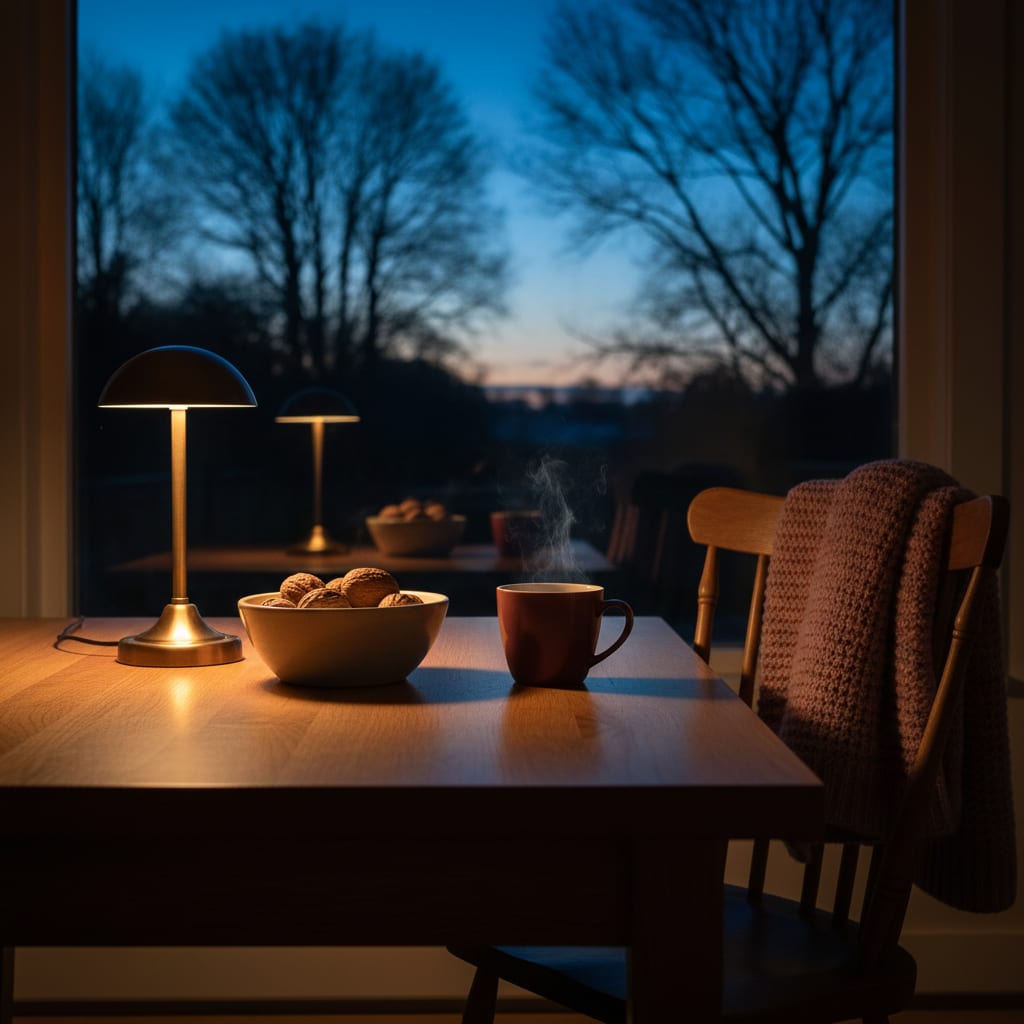
Usually not by much. A 4:30 sunset changes the sky, not how much sleep your child needs or the clock inside them that decides when sleep can come. Keep bedtime tied to the time your child wakes in the morning. If they are genuinely flagging, or it is the week after the clocks fell back, moving bedtime 15 to 30 minutes earlier is reasonable. Moving it to 5:30 because the window is black tends to buy either a child lying awake or a 5am start. The harder question is whose evening the early bedtime is really for.
What a 4:30 sunset actually looks like
US clocks fell back at 2 a.m. on Sunday, November 1, the rule the National Institute of Standards and Technology states as “the first Sunday of November”. The afternoon lost an hour of light overnight and keeps losing minutes until the solstice.
By the US Naval Observatory’s sun calculator, on December 15 the sun sets at 4:12 in Boston, 4:18 in Seattle, 4:20 in Chicago, 4:30 in New York and 4:45 in Los Angeles. Atlanta gets until 5:31. Mornings are dark too: Seattle’s sunrise that day is 7:51.
If your child goes to bed at 7:15, the dark part of their waking day is now about two and a half hours long, every day, into January. That is the stretch this question is really about.
Who is the early bedtime for?
When the light goes at 4:30, the day feels over. Your body reads the black window the way it reads 9pm in July: done. Except there are still dinner, a bath, two small people with plenty left in them, and a partner who may not be home for another hour and a half. The early bedtime starts to look like a rescue, partly yours.
That is not selfish, and it’s information: the late afternoon has become the hardest part of your day. But name it before you rearrange a child’s sleep around it, because a bedtime moved for your sake and justified by theirs tends to unravel. A child who isn’t ready lies there calling for water, and your evening disappears up the stairs anyway.
What young children’s body clocks actually do
The National Institutes of Health’s circadian-rhythms fact sheet says “light and dark have the biggest influence on circadian rhythms”, and that in the evening the brain’s master clock makes more melatonin, “causing sleepiness.” That sounds like an argument for following the sun down. The research on small children says otherwise.
In a 2026 study in the Journal of Biological Rhythms, researchers at the University of Colorado Boulder measured when melatonin began rising in 49 healthy children aged three to six, after a week on a bedtime their parents had chosen. On average it started about 35 minutes before bedtime. But for 18.4% of the children, the parent-chosen bedtime came before melatonin had started rising.
A smaller 2023 study from the same group gave 33 children aged three and four one hour of light in the hour before their usual bedtime. Across every brightness tested, from very dim to bright, their body clocks shifted later by an average of about 56 minutes. The authors concluded that “some young children may be highly sensitive to light exposure in the hour before bedtime”.
Both were small studies of healthy, good sleepers, and neither tested winter bedtimes. What they suggest is modest: a dark sky does not mean your child’s clock has moved, and an earlier bedtime can land before they are ready to sleep. The light the clock reads after 4:30 mostly comes from your own kitchen, which you can change. Betteroo has a plain-English rundown of which colors of light are kindest at bedtime, warm and dim in the evening, bright by day.
When an earlier bedtime is the right call
Sometimes your child really is done at 6:15. The test is the signals, not the window: a child who goes past tired turns frantic rather than drowsy, or falls asleep in the car at odd times. If you can’t tell whether you have a tired child or a wound-up one, reading the signals side by side is the first job.
Betteroo’s explainer on how sleep pressure builds through the day is clear that for a child carrying too much of it, “the fix is an earlier bedtime, not a later one”, held for several days. It is equally clear about the opposite case: a happy, chatty child who won’t settle has too little, and a slightly later bedtime can help.
So an earlier bedtime earns its place for a child showing overtired signs most evenings, the week after the clocks change, or the day the nap didn’t happen. Move it 15 to 30 minutes, not an hour, and hold it for a week. Judge it by how quickly they fall asleep and what time they wake. If falling asleep takes longer, or mornings start creeping toward 5am, the move was too far. A baby waking at 4am has its own fixes, and one of them is that anything before six counts as night.
Do the arithmetic before you commit. A child who sleeps about eleven hours and goes down at six is up at five. The AAP’s HealthyChildren advice to keep “the same waking time (both on weekdays and weekends)” is the anchor that holds when the sunset keeps moving.
 Bedtime by the clock, not the sky
Betteroo builds a personalized sleep plan around your child's age, so bedtime is set by what they need, not by when the sun goes down.
Take the free sleep quiz →
What to do with the dark hours instead
If bedtime mostly stays put, the work is making 4:30 to 7 livable, for them and for you.
Call it late afternoon, out loud. The dark is the strongest cue in the house, so give the hours a different feel: lamps on early and low, the overhead lights saved for cooking, music in the kitchen. A dimmable lamp with a bulb that warms as it dims, like the Philips Warm Glow, makes the last hour fade gradually instead of falling off a cliff at bath time.
Spend the light while you have it. Morning and midday light is what anchors a body clock, so it matters more now than the dark half. If the indoor afternoon is fraying everyone, the cabin-fever post covers the outside hour and your own winter low. If your youngest is still napping, whether that nap can happen outside in the cold is its own question, and the Nordic habit has its own answer.
Take something for yourself before seven, not after. If the early bedtime was partly about you, give yourself the thing directly: a call to a friend at 5 while the pasta boils, a podcast during bath time. The evening doesn’t have to wait for lights-out to start.
For the dark school-pickup evening and the car doze that quietly wrecks bedtime, see modernmommyblog’s guide to bedtime when it’s dark at four.
Sunset times are from the US Naval Observatory’s calculator and the quotes from NIST, NIH, HealthyChildren, Betteroo and the two PMC study pages, all loaded on 2026-11-03. Your own child’s sleep questions belong with their pediatrician.
One small thing tonight: note what time your child actually falls asleep, not when the light goes out, for three nights. That number, not the sunset, tells you whether bedtime should move.
FAQ: earlier bedtimes in winter
Should my toddler go to bed earlier when it gets dark early?
Not automatically. Keep the same wake time, and move bedtime 15 to 30 minutes earlier only if your child shows overtired signs. Hold any change for a week before judging it.
Will an earlier bedtime make my child wake up earlier?
It can. A child who needs about eleven hours and goes down at six may simply be up at five. If mornings start drifting earlier after you move bedtime, move it back.
Why is my child so tired at 5pm in winter?
Sometimes they really are tired, especially after a missed nap. Sometimes the dark and a warm house just make 5pm feel like the end of the day. Watch how quickly they fall asleep at their usual bedtime: fast and easy suggests real tiredness, while lying awake suggests the dark is doing the talking.
Three Good Reads

A One-Week Burnout Reset (Kids Still Home)
A realistic one-week mom burnout reset you can run with the kids still home — sleep first, then subtraction, one honest ask, and a day you can live in.
July 19, 2026
When to Wake a Toddler From a Nap (So Bedtime Survives)
When to wake a toddler from a nap: how long a nap can run before it costs bedtime, a latest-wake time you set at breakfast, and when not to cap it at all.
October 3, 2026
Babies Napping Outside in the Cold: Is the Nordic Habit Safe?
Babies napping outside in the cold is ordinary in Finland and other northern countries. What the research found, what US safe-sleep rules say, what to borrow.
October 31, 2026