Sleep When the Baby Sleeps: Why It Fails and What Helps
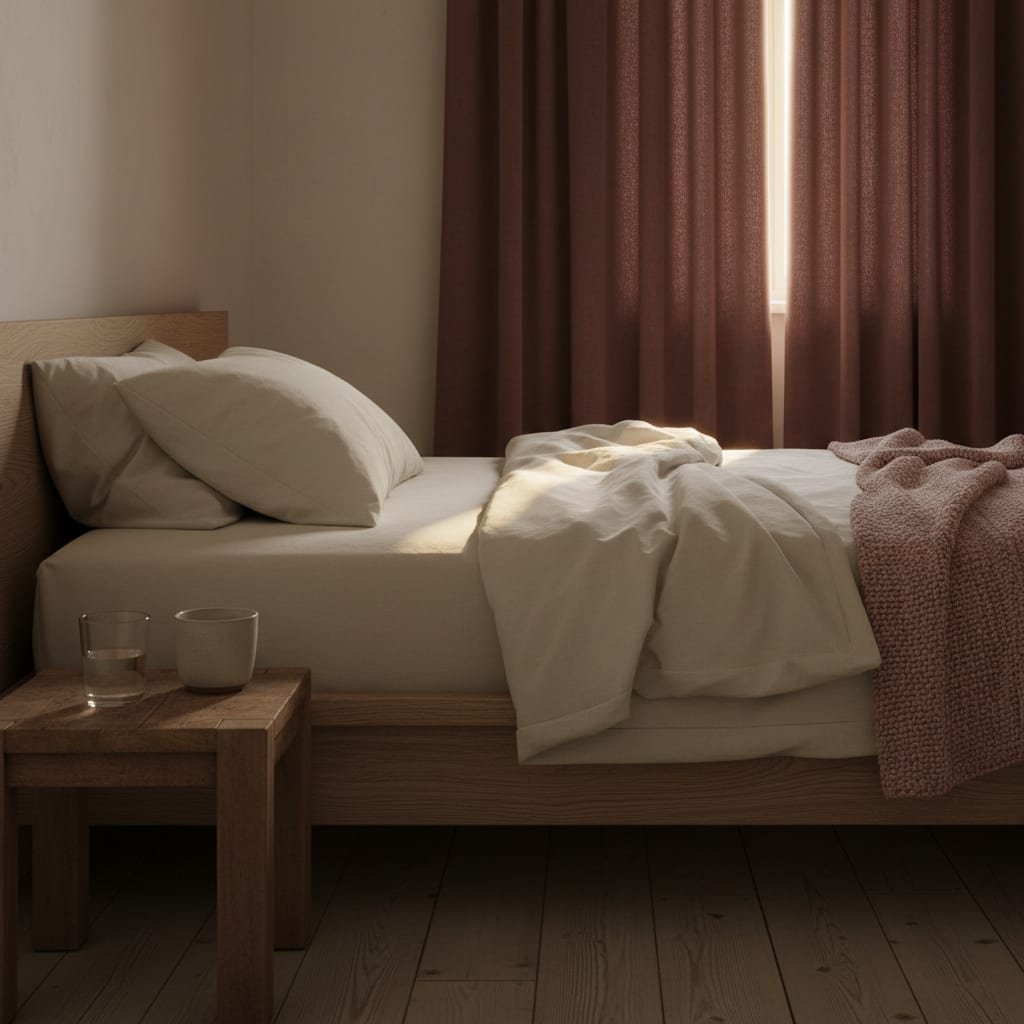
“Sleep when the baby sleeps” works only when four things line up: a nap long enough to fall asleep into, nobody else awake who needs you, a mind that switches off on cue, and a room dark enough for daytime sleep. At home with a baby and a toddler, at least two of those fail on most days, which is why the advice so often leaves you feeling you have failed at resting. What actually banks sleep is less tidy: one protected block that someone else covers, a lie-down that counts even when you do not drop off, and a bedroom set up for sleeping in daylight. And if you cannot sleep even when you are given the chance, that is worth telling a doctor.
The advice isn’t wrong. It’s just written for a different house
The logic is sound. A young baby sleeps a great deal in total, just in pieces scattered round the clock, so if your nights are broken you borrow back from the daytime pieces. On paper it is the most efficient thing a tired parent could do.
The trouble is that it assumes one baby, one adult and nothing else claiming the hour. Here it is tested against the real house.
Where it breaks down, honestly
The nap is shorter than the run-up. Short naps are not a sign that something is off. Betteroo’s rundown of how long naps typically run at each age says naps of 30 to 45 minutes are normal and common under about five to six months, because young babies often wake after one sleep cycle. Add the ten minutes it takes to lie down and for your body to notice, and you have given yourself just enough sleep to wake groggier than you went down.
The nap is the only time your hands are free. For a parent at home, the house is also the workplace, and the nap is the one window in the day when you can do anything with two hands: shower, eat sitting down, return the call, clear the table you have been walking past since breakfast. That is a real trade, not a lack of discipline, and pretending otherwise is why the advice feels like a scolding.
The baby is asleep. The two-year-old is not. This is the condition the advice never mentions. Betteroo’s guide to surviving the two-under-two years puts it about as honestly as it can be put: aim to line up the baby’s longest nap with your toddler’s afternoon nap. “It will not happen every day, but when it does, rest too.” Some days, the overlap is the only nap you will get. Plan for it, and do not treat the days it fails as your failure.
You lie there listening. Even when the house goes quiet, a lot of mothers cannot sleep in it. The ear stays on the monitor, the mind runs the list, and forty minutes pass in a state that is neither rest nor work. Sometimes that is plain vigilance, the part of you on duty not standing down. If it happens every time, though, keep reading, because it is one of the signs doctors ask about.
What actually helps you bank sleep
A protected block, covered by someone else. The most useful thing is a stretch of time with a start and an end, when another adult is fully on duty and you are somewhere you cannot hear the house. A partner takes both children out for a Saturday morning; a grandparent or a sitter comes for two hours on a weekday; a friend takes the toddler to the park. The helper’s real job is to get the noise out of earshot. For nights, the version that works is alternating whole nights rather than splitting each one, and it is set out properly in parent sleep debt, including the guilt that usually sinks it.
A lie-down that counts even if you don’t sleep. Lying down in a quiet room with your eyes closed is not a failed nap. It is rest, and it leaves you with more than you had, which is the only test of rest that matters. Lie down first and look at the list after, not the other way round, because the list never ends and the nap does. If the voice in your head says you have not earned it, that is the ledger talking, and me-time without the guilt math takes that voice apart properly.
Your own room, set up for daylight sleep. The National Heart, Lung, and Blood Institute’s healthy sleep habits advice is to keep your bedroom “quiet, cool, and dark”. Its section for shift workers, the people it expects to sleep in daytime, suggests light-blocking curtains, and a parent with broken nights is closer to that reader than to anyone else. When curtains are not an option, a blackout eye mask such as the Manta Sleep Mask, which has adjustable eye cups, makes any room dark enough.
One safety line, because exhaustion makes this easy to get wrong. Put the baby in their own sleep space before you lie down, and never nap with a baby on a sofa or armchair. The NIH’s Safe to Sleep campaign says couches and armchairs are particularly dangerous when an adult falls asleep on them while feeding or comforting a baby. The AAP’s parent’s guide to safe sleep puts the risk of sleep-related infant death at up to 67 times higher on a couch, soft armchair or cushion.

A balanced word on that: a plan will not stretch a four-month-old’s naps past what is normal for their age, or put the toddler down for you. It takes the timing arithmetic out of your head, which makes the overlap nap more likely.
When tired is something a doctor should hear about
Ordinary exhaustion eases when you finally get the sleep. The kind worth mentioning to a doctor often does not.
ACOG says the baby blues usually improve within a few days or one to two weeks without treatment, and that postpartum depression can occur up to a year after having a baby. The National Institute of Mental Health’s perinatal depression page lists, among its common signs, “difficulty sleeping (even when the baby is asleep)”, alongside a sad, anxious or “empty” mood most of the day for at least two weeks, loss of interest in things you used to enjoy, and guilt or hopelessness.
If several of those sound like you, ACOG’s advice is to call your ob-gyn or another health professional right away, and not to wait for your postpartum checkup. The National Maternal Mental Health Hotline, which NIMH lists, takes calls and texts at 1-833-852-6262, 24 hours a day (checked 2026-09-27). If you are having thoughts of harming yourself, call or text 988 now. And if you are not sure which side of the line you are on, burned out or something more is a calmer place to start.
One small thing this week: pick one afternoon, ask one person to take the children out of earshot for ninety minutes, and spend it lying down in a dark room, asleep or not. That is the advice, actually tested.
FAQ: sleep when the baby sleeps
Is “sleep when the baby sleeps” good advice?
The logic is fine; the conditions are rare. When naps are short or a toddler is awake, a protected block covered by another adult does far more than a snatched nap.
How do you sleep when the baby sleeps with a toddler at home?
Aim for the overlap: line up the baby’s longest nap with the toddler’s afternoon nap and lie down the moment both are asleep. It will not happen every day. On the days it fails, ask for a weekend or weekday block when someone takes both children out.
Why can’t I sleep even when the baby is asleep?
Sometimes it is plain vigilance: the part of you on duty not standing down in a bright, noisy house. If it happens most days, or comes with low or anxious mood for two weeks or more, tell your doctor, because NIMH lists it among the signs of perinatal depression.
Three Good Reads
How to Stop Revenge Bedtime Procrastination as a Mom
How to stop revenge bedtime procrastination as a mom — why you scroll until 1am after the kids sleep, and how to get a real evening back instead.
July 17, 2026
Alone Time vs Lonely Time: Knowing Which You Need
Alone time and lonely time feel identical at 3pm but need opposite fixes. How to tell solitude hunger from company hunger, and why moms misread the signal.
August 3, 2026
Asking for What You Need (Without a Fight)
How to ask your husband for what you need without it turning into a fight — the timing, the framing, and word-for-word scripts for the asks moms dread most.
July 27, 2026