What Counts as Rest (Scrolling Isn't, Sorry)
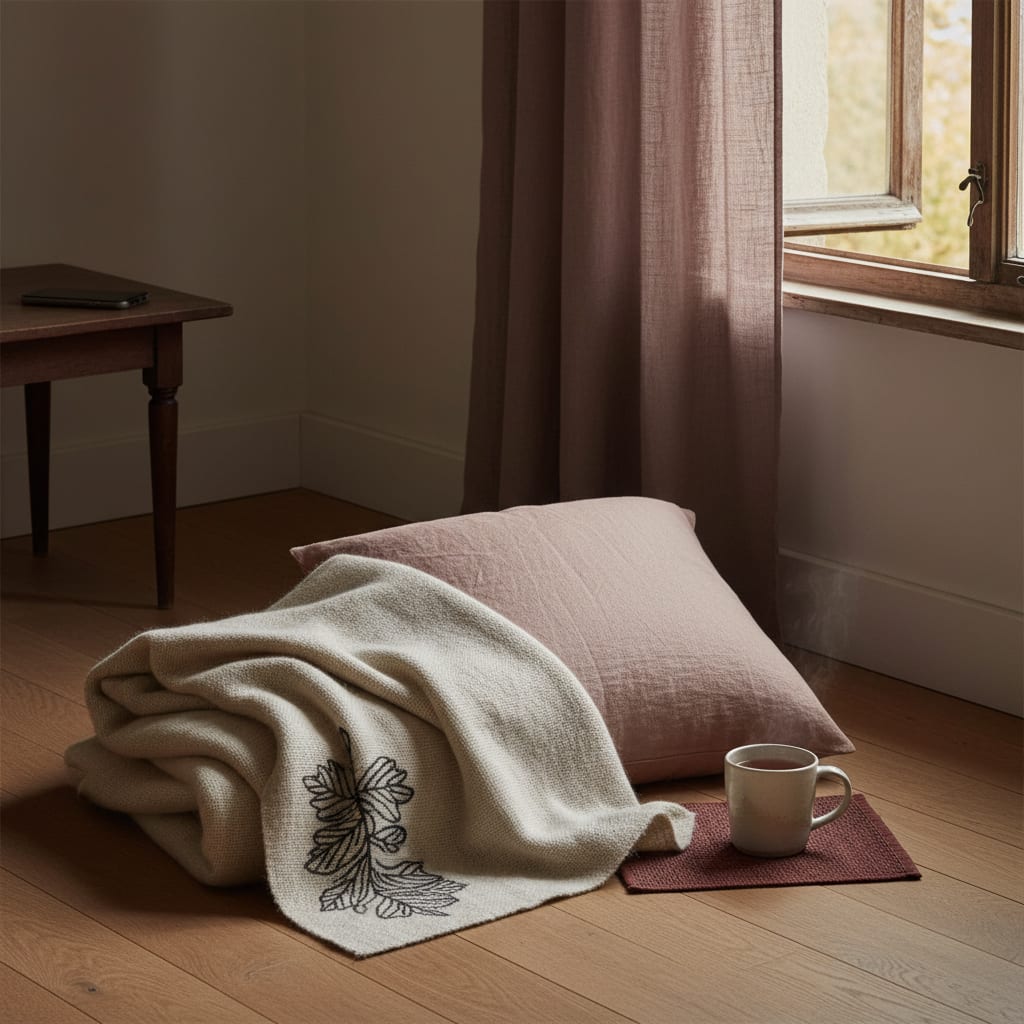
Something counts as rest if you have more capacity afterward than you had before. That’s the only test that matters, and it’s why an hour on your phone can leave you flatter than when you sat down while ten minutes of standing outside doing nothing can genuinely reset you. Scrolling is a break — it interrupts the demands — but it keeps the input coming, and input is the thing you’re short of relief from. The distinction isn’t moral. It’s mechanical, and once you can see it, you stop spending your only free hour on the wrong repair.
A break stops the demands. A rest refills the tank.
A break is negative space: nobody is asking you for anything. That’s valuable, and on the worst days it’s all that’s available.
A rest is different. A rest reduces the load while giving your system something it needs — quiet, movement, sleep, connection, absorption. You can tell them apart afterward, not during. Both feel fine while they’re happening. Only one of them leaves you able to hear “Mom” said forty times without your jaw tightening.
The phone is the purest break in existence and one of the weakest rests, because it removes the demands of the room and replaces them with three hundred smaller ones: opinions, images, comparisons, a woman with a nicer kitchen, a headline about something terrible. Your attention never stops working. It just changes employers.
Rest isn’t the absence of children. It’s the absence of input plus the presence of something restoring.
The kinds of tired (and why a nap fixes only one)
Dr. Saundra Dalton-Smith’s Sacred Rest makes the useful argument that rest comes in more than one variety, and that we default to the physical version because it’s the one with a name. It’s a Christian-framed book, so take that as you find it, but the core insight survives translation and it’s the most practically useful thing I’ve read on this. In stay-at-home terms:
Physical tired. Body used up. Fixed by sleep, lying down, a bath that is actually about heat rather than self-improvement.
Mental tired. Decision fatigue — the twelfth call about snacks, the running arithmetic of nap times. Fixed by fewer decisions, not by entertainment. A repeated meal plan rests you more than an interesting one.
Sensory tired. Noise, touch, lights, a toy that sings. Fixed by quiet and dim, and by nobody being on your body. This is the one most stay-at-home mothers are drowning in and least likely to name; if the world goes sandpapery by 5pm, that’s the tell.
Emotional tired. The work of absorbing everyone’s feelings and producing steady ones back. Fixed by being with someone you don’t have to manage — which is one of the reasons friendship is load-bearing rather than optional.
Social tired. Different, and easily confused with the last one: too much people-facing, including the pleasant kind. Fixed by solitude.
Creative tired. Nothing has gone in for months. Fixed by input you chose — a museum, a good novel, a walk somewhere new.
Match the rest to the tired. A nap when what you have is sensory overload leaves you lying in a loud house with your eyes shut, and the failure gets filed, wrongly, under nothing helps.
Why the phone wins anyway
Because it’s the only option that requires zero setup, zero permission, and zero decisions, at exactly the hour when you have none of those to spare. It isn’t weakness; it’s the path of least resistance meeting a person with no resistance left. Fighting it with willpower at 9pm is a losing proposition — you’re arguing with the most depleted version of yourself, and she has nothing.
Beat it with staging instead. Whatever the alternative is — the book, the yarn, the bath running, the shoes by the door — it has to be physically closer and easier than the phone before you sit down. This is the same mechanism that gets an evening back from the scroll: supply, not discipline.
The other move is to make the phone a chosen rest occasionally rather than a default one. Twenty minutes of something you actually like, ended on purpose, is a real pleasure. It’s the unbounded, unchosen version — the one that starts at 9:15 and finishes when you notice it’s 12:40 — that costs tomorrow.
The floor under all of it
No rest strategy survives a badly broken night, and this is the part I’d want said plainly to anyone reading a list like this at midnight: five hours of interrupted sleep can’t be offset by any amount of clever restoration during the day. If the reason you’re chronically unrested is a child who fights bedtime or wakes repeatedly, then the highest-value thing on your whole list isn’t a rest technique — it’s fixing the nights.
That’s fixable more often than exhausted parents believe. A personalized plan matched to your child’s age and stage — which is what Betteroo builds and keeps adjusting as they grow — removes the guessing that keeps most families cycling through the same bad month. It is a tool rather than a miracle, and toddlers still lodge objections. But it works on the supply of sleep, and everything in this post sits on top of that supply.
One small thing this week: next time you get twenty free minutes, name the tired first — body, brain, senses, feelings, people, ideas — and pick to match. It takes four seconds and it’s the difference between twenty minutes spent and twenty minutes returned. If nothing comes to mind, the menu has options sorted by how long you’ve got.
FAQ: what counts as rest
Does scrolling count as rest?
Rarely. It stops the demands of the room, which is genuinely worth something on a hard day, but it keeps a heavy stream of input running, so most people finish flatter than they started. Chosen and time-bounded, it’s a fine pleasure; unbounded and default, it’s the thing eating the hours you meant to rest in.
Why am I still exhausted after a nap?
Because a nap only repairs physical tiredness. If what you’re carrying is sensory overload, decision fatigue, or emotional labor, sleeping through the afternoon leaves the actual deficit untouched — and the mismatch is what makes people conclude that nothing works.
How much rest does a stay-at-home mom realistically need?
Daily pockets beat occasional blocks: ten to twenty quiet minutes most days, plus one longer stretch a week, plus protecting the nights as fiercely as circumstances allow. Frequency does more than duration, because the deficit accumulates daily rather than weekly.
What’s the fastest reset when I have five minutes?
Go outside, stand still, and let the input drop — no phone, no podcast, no purpose. Daylight and quiet together are the closest thing to a reliable five-minute reset for the sensory kind of tired, which is the kind most mothers of small children are running on.
Three Good Reads
Spending Money You Didn't Earn (The Feelings Part)
Why spending money you didn't earn feels strange as a stay-at-home mom — the guilt, the asking, the worth question — and how to put the flinch down for good.
July 27, 2026
Stay-at-Home Mom Resentment: When He Gets to Leave
Resenting your partner for leaving the house every morning is common and rarely about him. What the 8am resentment is actually pointing at, and what lowers it.
August 15, 2026
Depleted Mother Syndrome: The Name for Running on Empty
Depleted mother syndrome isn't a diagnosis, but the burnout it names is real. What the term describes, how it differs from tired, and where to start refilling.
October 11, 2026