The Me-Time Menu: 15 Options by Minutes Available
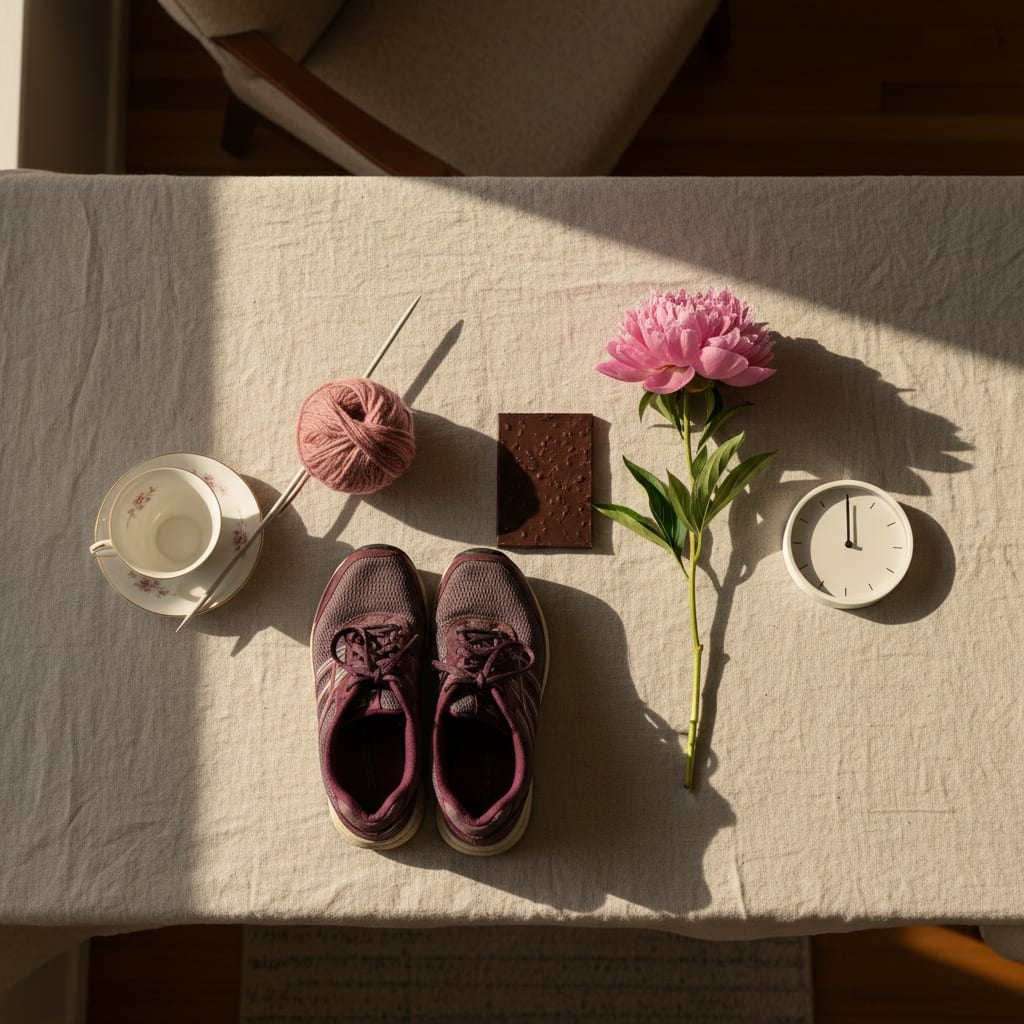
The reason free time gets wasted isn’t that mothers don’t know what they like. It’s that choosing costs energy you don’t have at 8:50pm, so the phone wins by default and the twenty minutes disappear. A menu fixes that: decide once, in daylight, what belongs in each time slot, and then just read the list. Below are fifteen options sorted by minutes available — five, fifteen, thirty, and the rare ninety. Nothing to download; take what’s useful, ignore what isn’t, and treat it as a starting draft of your own.
How to use a menu instead of a decision
Three rules make this work at all.
Match the slot, don’t stretch it. Trying to fit a thirty-minute thing into eleven minutes produces a rushed version of the thing plus a small failure. Read the right column and stop there.
Stage the option before you need it. Whatever’s on your five-minute list should require nothing you’d have to go and find. Proximity beats intention; the phone is winning on convenience, not on merit.
Pick for the tired you actually have. Body tired, brain tired, senses fried and social batteries flat all want different things — which is worth two seconds of diagnosis before you spend the only twenty minutes you’re getting.
Five minutes
1. Outside, standing still, no phone. Daylight and a drop in noise, together. The fastest reset available to a person who cannot leave the house, and it works on a doorstep, a balcony, or a strip of grass by the parking lot.
2. A hot drink made properly and drunk sitting down. Not reheated three times. Made, carried to a chair, finished. The sitting is the active ingredient.
3. One loud song in headphones. Headphones make it yours rather than the room’s. Choose it in advance so the choosing doesn’t eat the five minutes.
4. Flat on the floor, legs up the wall, eyes closed. Unglamorous, mildly ridiculous, and better than lying on a bed because it stops you falling asleep in a slot too short to sleep in.
Fifteen minutes
5. Around the block with nothing in your ears. No stroller, no podcast, no call. Fifteen minutes of walking with no input is a different animal from fifteen minutes of walking as multitasking.
6. A shower with no agenda. Hot, slow, not a maintenance task. Most of us take functional showers for years without noticing the difference.
7. Fifteen pages, timer on. The timer sounds absurd until you’ve experienced how much easier it is to start a book when there’s a defined end. Keep the book where you sit, not where books live.
8. Hands busy, brain idle. Knitting, a small sketchbook like the Moleskine Art pocket pad, a puzzle. This is where an interruptible hobby pays for itself — fifteen minutes is enough to actually be in the middle of something.
9. A voice note to a friend. Not a text thread. Two minutes of talking sends more of you than twenty minutes of typing, and it survives the fact that your call windows never line up.
Half an hour
10. Exercise you chose. Run, swim, a class, the video you don’t hate. The point is less the fitness than the fact that it’s the only half hour of the day where the objective is yours.
11. Coffee alone, out of the house. A different chair, someone else’s noise, nobody asking you for anything. Thirty minutes out is often worth more than sixty in.
12. A bath with the door locked and something to read. The bath earns its place here rather than at the top of the list, and only with the lock and the book — heat plus absorption, not heat plus waiting.
13. A real phone call. An actual conversation with a friend you don’t have to manage. This is the specific repair for emotional tiredness, which nothing solitary fixes.
Ninety minutes, when it happens
14. Sleep. First, and more often than feels reasonable. A daytime nap or an 8:30pm bedtime is the least interesting option on this menu and the one that changes the most days.
15. One thing out of the house with no errand attached. A matinee, a library, a garden, a long browse in a bookshop. The rule is that nothing on the trip may be useful to anyone else — no groceries “while you’re out,” no returns, no pharmacy.
When you’re too tired to choose anything
Some nights the menu itself feels like homework. On those nights, the answer is number 1 or number 14 — outside for five minutes, or bed early — and nothing else is on offer. Having only two options is a feature. The nights when everything is too much are exactly the nights when a long list becomes one more demand.
And if the reason you’re not taking the time is not the choosing but the ledger of hours owed running in the background, no menu will fix that. That one’s fixed by taking the time often enough that it stops being an event.
One small thing this week: write your own version on the back of an envelope — three options for five minutes, three for fifteen, one for thirty — and put it where you sit at night. Yours will be better than mine, because it will contain the things you actually like.
FAQ: the me-time menu
What can I do with only five minutes to myself?
Go outside and stand still, make and actually drink a hot drink sitting down, play one song in headphones, or lie on the floor with your legs up the wall. Five-minute options have to need no setup at all — anything you’d have to fetch or plan won’t survive contact with a real five minutes.
How do I stop wasting my free time on my phone?
Remove the choosing and the reaching. Decide in advance what belongs in each length of slot, and put that thing physically nearer than the phone before you sit down. Willpower at 9pm loses to convenience nearly every time, so change the convenience.
How much me-time is realistic for a stay-at-home mom?
Small daily pockets plus one longer weekly block is the pattern that actually holds. Ten to twenty minutes most days does more for capacity than a heroic occasional afternoon, and the routine version attracts far less guilt.
What if my kids don’t nap and I get no reliable window?
Work off the five-minute column and the after-bedtime slot, and use the pockets you can predict — the twenty minutes of independent play in the morning, the stretch after your partner walks in. Menus beat schedules exactly because the windows are unpredictable.
Three Good Reads
When You Feel Like Roommates Who Share a Calendar
Feeling like roommates instead of a couple happens to good marriages in the little-kids years. Why the flattening occurs — and small, real ways back.
July 23, 2026
SAHM Burnout: When Home Is Also Your Job
Stay-at-home mom burnout, explained by someone in it — why the no-off-switch structure of SAHM life causes it, and how to build recovery back in.
July 17, 2026
When All Your Friends Still Have Jobs
When all your friends still have jobs, 2pm is the loneliest hour. Why weekday friendship gets so hard for SAHMs — and how to keep and find your people.
July 23, 2026