Hobbies That Survive Naptime (Actually)
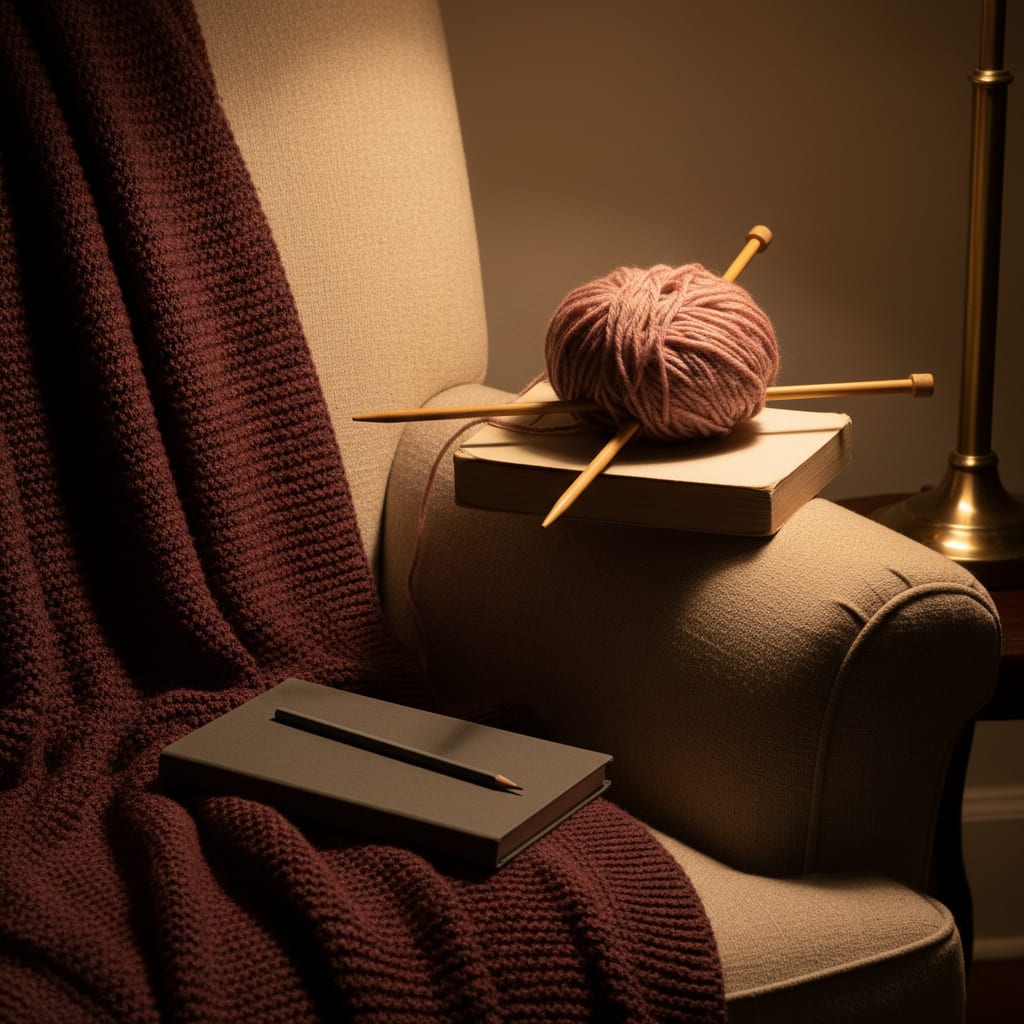
A hobby survives motherhood if it can be picked up and put down in under two minutes, needs no setup or cleanup, tolerates being abandoned mid-sentence, and doesn’t depend on a particular hour of the day. That’s the whole test. It rules out most of what gets recommended to tired mothers — the pottery class, the oil painting, the thing that requires a three-hour block on a Tuesday evening — and it leaves a surprisingly good list behind. What you’re looking for is not a passion. It’s something with a low activation cost that you can actually be in the middle of.
The four rules an interruptible hobby has to pass
It starts in under two minutes. If getting going takes longer than the window you usually have, you’ll skip it on the days you most need it. The hobby has to be closer to hand than your phone, or your phone wins by default every single time.
It has no cleanup. Anything that must be washed, dried, put out of a toddler’s reach, or left drying somewhere in a small apartment carries a tax you’ll pay at 9pm when you’re already finished. That tax is what kills the hobby by week three — not lack of interest.
It survives interruption. The measure isn’t whether you can concentrate; it’s whether stopping mid-row, mid-page, mid-bar costs you anything. Knitting survives. A soufflé does not.
It doesn’t need a specific hour. Anything scheduled at 7pm collides with bedtime forever. Anything that can happen at 7am, 1pm, or 9:40pm survives the years when your evenings are unpredictable — which, if bedtime is currently a two-hour campaign, is a problem worth fixing upstream rather than working around.
The right hobby isn’t the one you love most. It’s the one you’ll still be doing in November.
Twelve that pass
Reading. The default for a reason: instant on, instant off, no cleanup, works in six-minute increments. Keep one book physically in the room you sit in most, not in a tidy pile somewhere aspirational.
Knitting or crochet. Genuinely the archetype — portable, resumable, quiet, and it produces something. The rhythm also occupies the hands that would otherwise be holding a phone.
Running or walking. Low equipment, no scheduling, and it doubles as the only reliable way most of us discharge a day’s worth of stress from the body.
Sourdough or any slow bread. Its long waits map perfectly onto a day with a nap in it. You are never doing more than four minutes of work at a time.
Drawing in a small sketchbook. Small is the operative word: an A6 book (a plain Leuchtturm1917 Pocket, say) and one pencil sit on the arm of a chair and demand nothing. Watercolor works too, with a travel tin like the Cotman Sketchers’ Pocket Set — no water jar bigger than a cup.
Language learning. Ten minutes a day is the correct dose anyway, which makes the toddler years accidentally well suited to it.
Houseplants. Slow, forgiving, entirely on your schedule, and the payoff arrives in months rather than minutes — a nice antidote to a job with no visible progress.
Journaling or morning pages. Julia Cameron’s The Artist’s Way built a whole method on three handwritten pages before the day begins, and while the twelve-week program is more than most mothers of small children can take on, the pages themselves need nothing but a notebook and fifteen minutes. Honest caveat: the book’s tone is more spiritual than some readers want. Take the practice, leave the rest.
An instrument with headphones. A keyboard with a headphone jack, such as the Yamaha PSR-E373, is the sleeping-baby loophole. Fifteen minutes at 9pm, nobody wakes.
Baking or cooking one specific thing well. Not weeknight dinner — that’s work. One thing, chosen by you, made repeatedly until it’s genuinely good.
Photography of something that isn’t your children. The street, the light in one window, the same tree monthly. It re-trains the eye to notice things that aren’t demands.
Puzzles, chess apps, crosswords. Small, self-contained, and they engage the part of your brain that has been running nothing but logistics for years.
The ones to save for later (not forever)
Some hobbies are wonderful and simply mis-timed. Ceramics, most in-person classes, choir, community theatre, anything with a fixed weekly commitment at bedtime, anything with a drying stage, anything that lives on a table you also eat at. There’s no virtue in forcing these now; the cost lands entirely on the two hours you have left, and the failure feels personal when it’s purely logistical.
Write them down somewhere, though. “Later” is not the same as “never,” and a list of things you intend to do when the youngest is five is a surprisingly effective piece of morale.
Starting when you can’t remember what you like
If the honest answer to what do you enjoy is a long pause, that’s a very ordinary few years in, and it isn’t a defect. Preferences come back through doing rather than deciding. Pick the cheapest version of something you liked before children — the $12 sketchbook, not the course; the library book, not the reading challenge — and try it three times before you judge it. The first attempt is always rusty and tells you nothing.
Keep the equipment where you sit, not where it belongs. And check what you’re calling rest: if the hobby competes with a two-hour scroll, it will lose on effort unless it’s within arm’s reach.
One small thing this week: put one hobby object physically on the arm of the chair you collapse into at night. Not in a drawer, not in a basket — out, in your way. Proximity does more for a hobby’s survival than motivation ever has, and the first time you pick it up instead of the phone, the whole evening changes shape.
FAQ: hobbies for stay-at-home moms
What hobbies work best with young kids in the house?
Ones that start fast, stop fast, and leave no mess: reading, knitting or crochet, walking or running, sketching in a small book, language practice, journaling, an instrument with headphones. The common thread is a low activation cost — you want something you can be in the middle of, not something you have to set up.
How do I find time for a hobby as a stay-at-home mom?
Stop looking for an hour and use the pockets you already have: the fifteen minutes after the nap starts, the twenty before your partner gets home, the half hour after bedtime before you’re too tired to be a person. Pockets require an interruptible hobby, which is why the choice matters more than the schedule.
I don’t know what I like anymore. Where do I start?
Start with what nineteen-year-old you liked, in its smallest and cheapest form, and try it three times before deciding. Enthusiasm is usually a result of doing something, not a prerequisite for it, so waiting to feel inspired first keeps most people waiting indefinitely.
Is it worth having a hobby if I only get fifteen minutes?
Yes, and arguably more than it’s worth having one you do for four hours twice a year. Fifteen minutes of something that’s yours, most days, is what keeps a person recognizable to herself — the point isn’t output, it’s continuity.
Three Good Reads
When You're the Only One Who Can Do Bedtime
Being the only person who can do bedtime is tender and it is a trap. Why the same song has to be your voice, and how to make the ritual transferable.
August 27, 2026
The best parts of staying home leave no evidence behind. An essay on the unphotographable joys of motherhood, and why noticing beats capturing them.
August 7, 2026
When You Hate Being a SAHM (and Love Your Kids)
If you've typed 'I hate being a stay-at-home mom' into a search bar, this is the judgment-free essay — both things can be true, and neither makes you bad.
July 17, 2026