When the Family Pet Dies: The First Two Weeks of Nights
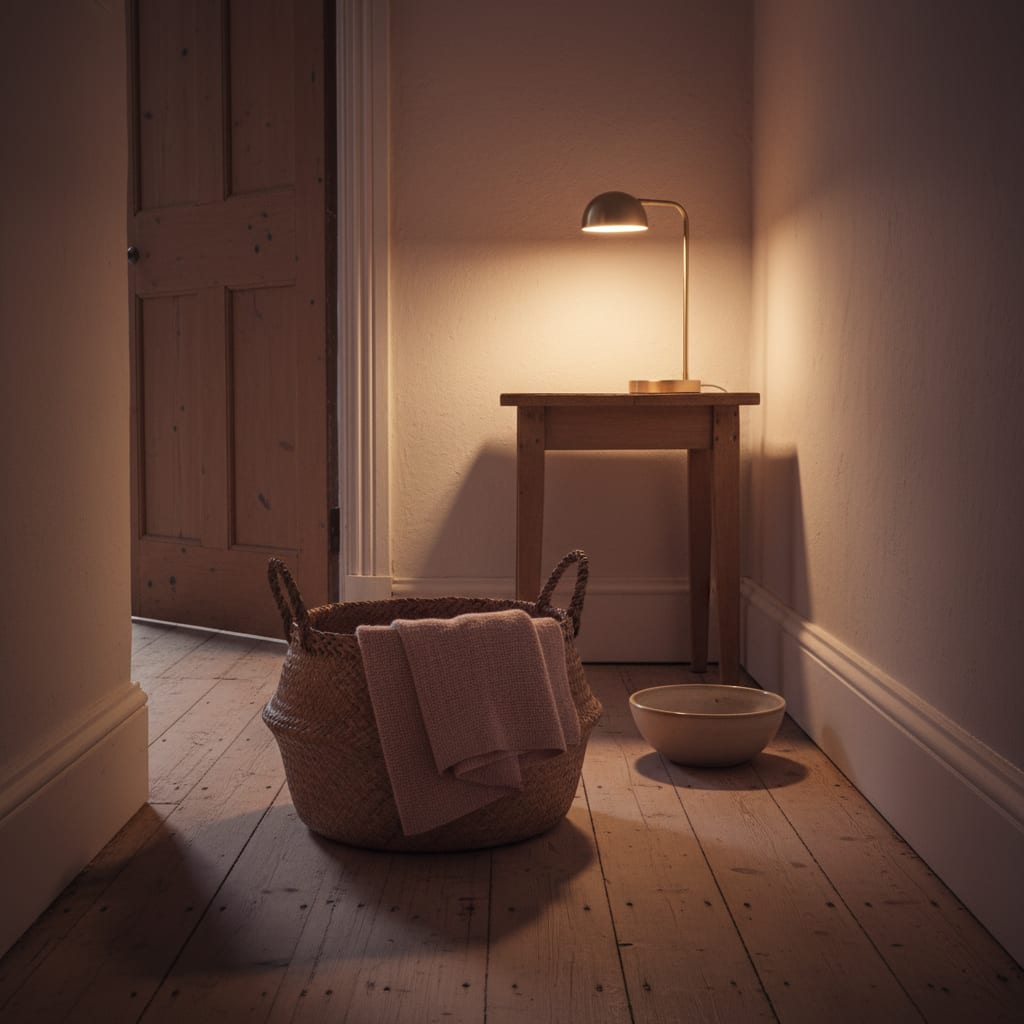
For the first fortnight after a family pet dies, expect bedtime to be the hardest hour of the day. The reasons are structural. The animal was usually in the routine — on the landing, at the foot of the bed, on the last walk before pyjamas — so the routine has a hole in it at the moment a child is least distracted. And for most children this is the first death they have met at all, so the questions arriving at 8pm are not about the dog. They are about everybody. Nobody can tell you how long it lasts. What you can do is hold the shape of the evening steady while the middle of it is missing.
This is deliberately not our piece on a child’s sleep after a death in the family. That arrives with a house full of adults, arrangements and a phone that keeps ringing. This one arrives quietly on an ordinary Tuesday, into a house where the only visible change is a bowl by the back door — and where the person grieving hardest is the one everybody expects to be fine about it.
Why this one lands at bedtime specifically
Think about where the animal was between six and eight in the evening. For a lot of families: everywhere. Underfoot at dinner, on the stairs during the bath, in the doorway during the story. A dog often was the last walk.
So the loss is not met once, as news. It is a series of small absences, nearly all timetabled for the evening — and the house sounds different too. A child lying awake is doing nothing but listening.
Nemours’ KidsHealth is direct about the scale: grieving a pet, for a child, is “similar to grieving over a person,” and “losing a pet who offered love and companionship can be much harder than losing a distant relative.”
What a first death does to the questions
Bedtime fills with questions because a pet’s death is usually the first one, and a first death does not stay about itself. What you are being asked, eventually, is whether the same thing will happen to the grandparents, to you, and to them.
Do not gloss. KidsHealth is unambiguous that “telling a child that ‘Buster ran away’ or ‘Max went on a trip’ is not a good idea.”
Watch the sleep words, if there was a euthanasia. The guidance is to “be careful about saying the animal went ‘to sleep’ or ‘got put to sleep,’” because “young kids can take things literally.” If it has already been said in your house, use the plain word next time. A child who has connected sleep with not waking up will fight bedtime, and that is solvable rather than mysterious.
Answer the enormous questions briefly and move them to daylight. Late-night metaphysics is a bad genre for everyone.
The empty basket, and when to move it
There is no correct answer and anyone who gives you one is guessing. But there is a distinction worth making between things that are upsetting and things that are unsafe to leave. Litter trays and half-finished food are the second kind and can go quietly. A basket, a collar, a lead on its hook are the first — and the child’s proof that the animal was real.
Let the child set the timing on anything in their room and handle the rest without ceremony. If the basket is what your four-year-old wants beside the bed, that is not a problem to solve.
Where the routine had an animal-shaped step — the last walk, feeding the cat before teeth — replace it rather than delete it. Not with something meaningful; with something dull and reliable. A walk to the corner and back. Watering something. The sequence needs the right number of steps, because that is what a child leans on when nothing else is. Betteroo’s walkthrough of an ordinary toddler bedtime is a plain template if yours has fallen apart.
The guilt that only shows up in the dark
This distinguishes pet grief from almost every other kind a child will meet, and it is worth knowing before it arrives at 9pm.
KidsHealth lists it among the ordinary reactions: alongside sadness, children may feel “loneliness, anger if the pet was euthanized, frustration that the pet couldn’t get better, or guilt about times that they were mean to or didn’t care for the pet as promised.”
That last one is common and almost never said at dinner. It gets said in the dark, as a confession about a tail pulled two years ago or the walks that were supposed to be their job. It does not need don’t be silly, he loved you, which ends the conversation without touching it. It needs the fact — he had a good life and you were part of why — then a short list of what the child did do, then the light off.
A book earns its place here, because it hands a child a script for a feeling they cannot name. The Tenth Good Thing About Barney is the one most often given at this age — a boy tries to think of ten good things about a dead cat and manages nine.
Nobody sends a card for a dog
You were the animal’s daytime colleague — the only other creature in the house during the hours nobody else is there — and you are grieving it while explaining death to a four-year-old, calmly, at bedtime, twice, inside a convention that does not recognise the loss. KidsHealth says the quiet part out loud to parents: you “might have to explain that to friends, family members, or others who don’t own pets or don’t understand.”
Nobody brings a lasagne. Nobody asks how you are on day four. The grief has no scaffolding, and it lands in a job with no compassionate leave, in the house where the empty basket is.
Two unglamorous things. Say it out loud to one person who will not qualify it. And split the bedtimes deliberately for a fortnight, because the parent closest to the animal is usually the one doing every bedtime, and sleep debt and grief compound each other rather than adding up.
 A routine that lives somewhere other than your head
Betteroo builds a personalized, age-matched sleep plan that adjusts as your child grows — useful in a fortnight when you are improvising everything else.
Take the 2-minute sleep quiz →
A routine that lives somewhere other than your head
Betteroo builds a personalized, age-matched sleep plan that adjusts as your child grows — useful in a fortnight when you are improvising everything else.
Take the 2-minute sleep quiz →
Said plainly: no plan addresses grief. What it removes is having to rebuild a bedtime from scratch in the same fortnight.
When to ask for more help
Iowa State’s veterinary centre puts the timing question the only honest way — “grief looks different for everyone and there is no timeline on how you feel or what you feel,” and the stages come in waves rather than in order. There is no fortnight after which this is finished, including for you.
What is worth acting on is a change in how your child approaches ordinary life — school, food, play — rather than the sadness itself. That is a conversation with their doctor. For adults, the Association for Pet Loss and Bereavement runs support groups and chat rooms for this. And if the flatness has stopped being grief and become something heavier, the honest check-in is here, and the 988 Suicide & Crisis Lifeline is free, 24/7, by call or text.
One small thing this week: put one photograph where the child can see it from their bed. Not a shrine — one picture. It answers, silently, the question they were going to ask you at ten past eight.
FAQ: children’s sleep after a pet dies
How long will my child’s sleep be affected after our pet died?
No number, and the sources that matter decline to give one. Judge direction rather than duration: a fortnight of steady, unexciting bedtimes should be going somewhere. If it is not, or the change has spread into eating, school or play, talk to your child’s doctor.
Should we get a new pet to help my child?
Not as a replacement, and not in the first fortnight. KidsHealth frames it as something for “when the time is right” — an animal welcomed into the family, not a patch over the last one.
My child keeps getting out of bed since the dog died. What do I do?
Assume it is the missing presence rather than defiance, and answer with something predictable — the door at the same angle, the same sentence, the same lamp. If it has hardened into a habit, the mechanics of keeping a child in their own bed are the same as in any other month.
Three Good Reads

Mom Burnout: What It Feels Like and What Helps
Mom burnout, or parental burnout, described from the inside: how it differs from ordinary tired, the signs it's building, and the small things that help.
July 17, 2026
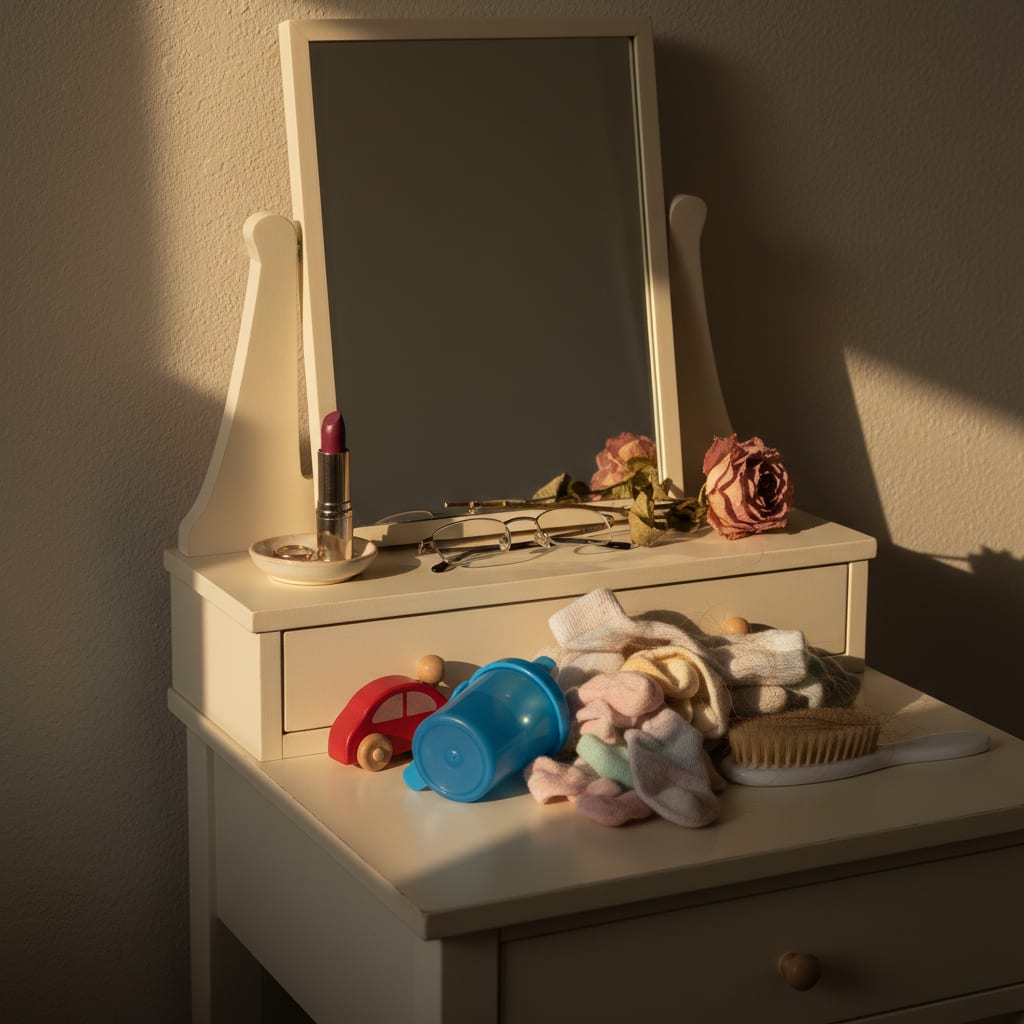
Losing Yourself in Motherhood: Finding the Way Back
Losing yourself in motherhood is grief, not failure. What the disappearing actually feels like, how to tell it from something heavier, and the way back.
August 11, 2026

Cabin Fever With Kids: Why Winter Bedtimes Fall Apart
After a day stuck indoors, a restless winter bedtime is the day's missing movement and daylight arriving at 7pm. What helps them settle, and what helps you.
October 23, 2026