Winter Blues as a Stay-at-Home Mom: When the House Shrinks
Winter blues hit hardest at home: dark by 4:30, nowhere to go, the same four walls. What the slump is, how it differs from SAD, and what actually helps.
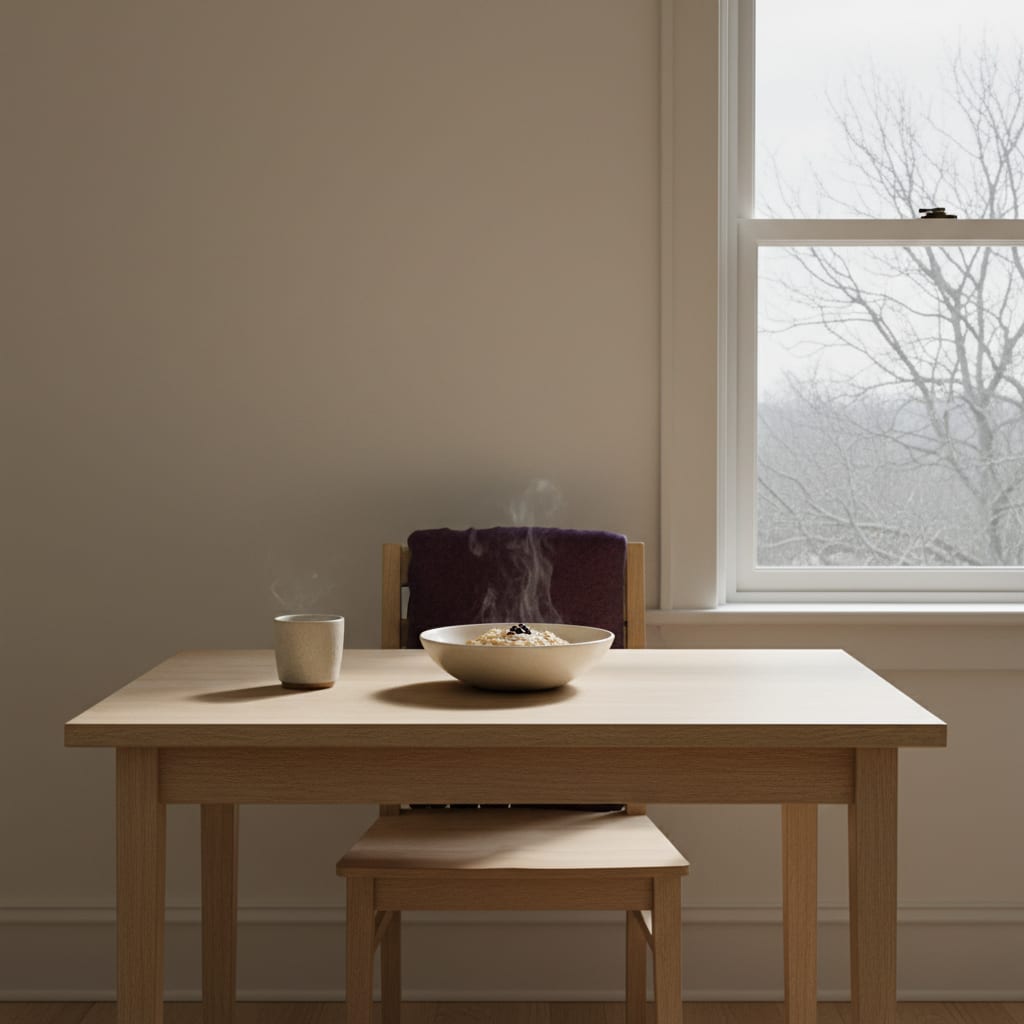
Winter blues are the low, flat, can’t-be-bothered feeling that arrives when the days get short and lifts when the light comes back in spring. They are common, and they are not the same as seasonal affective disorder (SAD), which is a form of depression that a doctor diagnoses. At home with small children, the blues hit harder because winter takes away what made the day bearable: the park, the walk, the hour on the porch. What helps is light in the morning, one fixed outing a day, and a plan for 4:30pm.
What winter blues are, and what they aren’t
The National Institute of Mental Health describes the ordinary version in one sentence: “Many people feel ‘down’ or have the ‘winter blues’ when the days get shorter in the fall and winter and feel better in the spring when longer daylight hours return.”
That is the territory of this piece. Slower mornings. Less patience. A pull toward the sofa and the carbs. A sense that the day is something to get through rather than live in.
NIMH draws the line where it becomes something else. Seasonal affective disorder is “a type of depression characterized by a recurrent seasonal pattern, with symptoms lasting about 4−5 months out of the year.” The signs of depression it lists include a persistent sad, anxious or “empty” mood “most of the day, nearly every day, for at least 2 weeks,” hopelessness, guilt or worthlessness, and losing interest in things you used to enjoy. A diagnosis also needs the seasonal pattern to have shown up for at least two consecutive years.
So the blues are a mood. SAD is an illness. If you read that list and recognized yourself in most of it, skip down to the section on when it’s more than the blues. That section matters more than the rest of this page.
NIMH makes one more distinction worth knowing in December: winter-pattern SAD “should not be confused with ‘holiday blues’”, the stress that comes with the calendar rather than the daylight. A lot of what weighs on a mother in December is the second kind. That doesn’t make it lighter, but it does mean the fix is partly different.
Why it lands harder at home
At home with a two-year-old and a four-year-old, winter removes the outdoor parts of the day, and those were often the only parts with any space in them. In June the afternoon had a playground in it. In December it has the same living room it had all morning, darker by the hour, and you are the entertainment.
The house literally shrinks. Everyone is in the same three rooms, the noise has nowhere to go, and the only adult conversation might be a text at 5:50 saying he’s running late. The loneliness that is there all year gets a second layer, because the casual contact that came with being outside goes too: the other parent on the bench, the neighbor at the mailbox.
Then there is the dark afternoon. When the light goes at 4:30, the hardest stretch of the day starts in the dark and runs on. The children feel it too, which is its own subject: cabin fever at bedtime covers what a housebound day does to the children’s evening. This piece is about the mother’s.
What actually helps
None of this is treatment. These are the small structural things that make a winter day at home less heavy.
Get light early. NIMH notes that light therapy for winter-pattern SAD is usually done “first thing in the morning.” You don’t need a diagnosis to borrow the timing. Open the curtains the moment you’re up and eat breakfast at the brightest window in the house. On a clear day, a ten-minute walk before nine counts for more than an hour out at three.
Make one outing non-negotiable. Not a good outing. Just a fixed one. The library story time, the grocery run, a lap of the block in snowsuits. A day with one thing in it has a shape; a day with nothing in it is just the same room for eleven hours. NIMH describes the idea behind this as “behavioral activation”: deliberately scheduling “pleasant, engaging indoor or outdoor activities” to offset the loss of interest winter brings. You can use the principle at home.
Plan 4:30 in the morning. The worst hour is predictable, so plan it while you still have energy. Pick the bath, the special box of toys, dinner started early, music on, all the lights on. Treat the darkness as the cue for a routine, not a wait.
Put an adult in the week on purpose. In summer, contact happens by accident. In winter you have to book it. One standing coffee, a walk with another parent, a phone call on Thursday at nap time. Put it on the calendar the way you would a doctor’s appointment.
Ask about a light box. If the slump is heavy and regular, ask your doctor whether light therapy is worth trying. NIMH describes the standard as sitting in front of a 10,000-lux light box for about 30 to 45 minutes a day, usually first thing in the morning, and notes that people with certain eye diseases or on certain medications may need to use it under medical supervision. If your doctor says yes, a 10,000-lux lamp such as the Verilux HappyLight Luxe is small enough for a kitchen counter at breakfast.
When it’s more than the blues
Winter blues lift with the light and still leave room for good days. Talk to a doctor, and don’t wait for spring, if:
- the low mood is there most of the day, nearly every day, for more than two weeks;
- you’ve lost interest in nearly everything, including things you’d normally look forward to;
- you feel hopeless, worthless or guilty much of the time;
- your sleep or appetite has changed a lot, such as sleeping far more than usual;
- it has happened winter after winter.
These are the signs NIMH lists, and if this page reads more like a description of you than of a slow week, there’s a separate piece on telling burnout from something more.
If you had a baby in the last year, Postpartum Support International runs a HelpLine for mothers: call or text 1-800-944-4773, with English and Spanish available (number checked 2026-11-19). If you ever have thoughts of harming yourself, NIMH’s advice is to call or text the 988 Suicide and Crisis Lifeline at 988, or chat at 988lifeline.org, at any hour. In a life-threatening situation, call 911.
Quotes are from NIMH’s “Seasonal Affective Disorder” page, loaded on 2026-11-19, and the PSI number from CHOP’s page on Postpartum Support International, loaded the same day. I’m an editor, not a clinician. Questions about your own mood belong with your doctor.
One small thing tomorrow: open the curtains before you put the kettle on, and eat breakfast at the brightest window you have.
FAQ: winter blues for moms at home
What is the difference between winter blues and seasonal depression?
Winter blues are a common dip in mood and energy when the days get short, and they ease in spring. Seasonal affective disorder is a type of depression. NIMH describes symptoms most of the day, nearly every day, for at least two weeks, recurring in the same season for at least two years. A doctor diagnoses it.
Why do I feel worse in winter as a stay-at-home mom?
Winter takes away the outdoor parts of a day at home, along with the casual adult contact that came with them. You spend more hours in the same rooms with small children, and the hardest stretch of the day starts in the dark.
When should I see a doctor about winter blues?
If the low mood lasts most of the day, nearly every day, for more than two weeks, if you have lost interest in most things or feel hopeless, or if it comes back every winter, see your doctor. Don’t wait for spring.