Bored Stay-at-Home Mom: Why It's Not Ingratitude
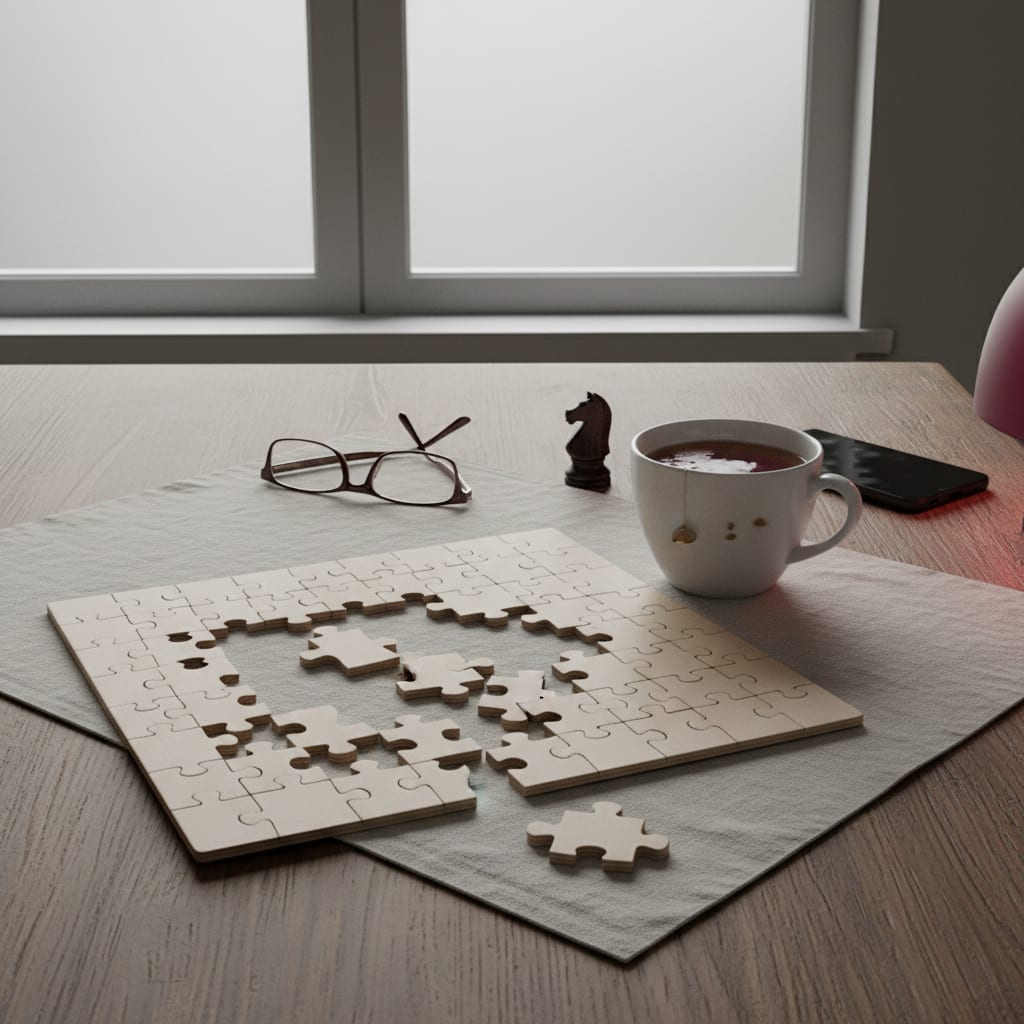
Being bored as a stay-at-home mom is not a failure of gratitude — it’s an underused mind reporting in. Boredom is what a capable brain does when the work in front of it is emotionally enormous and cognitively repetitive at the same time, which is an unusual combination and a genuinely hard one to sit inside. You can find your children fascinating and your days understimulating without any contradiction, because they aren’t the same measurement. Naming it as boredom rather than ingratitude matters, because the two have entirely different remedies: one wants more thinking, and the other wants a lecture nobody has ever benefited from.
Two different measurements, constantly confused
The confusion runs like this. Someone says they’re bored at home with the kids. Someone else hears my children are boring, which sounds monstrous, so the first person retracts it and files the feeling under shameful. Then it comes back on Wednesday.
But nobody said that. Here’s the actual state of affairs: the emotional demand of this job is close to maximum, and the cognitive demand is close to zero. You are fully occupied and barely engaged. Your attention is entirely spoken for — you cannot read, cannot follow a thought to its end, cannot have an uninterrupted phone call — while the actual content of the day asks nothing of the part of you that used to solve problems, argue positions, notice patterns, be good at something difficult.
That’s not boredom in the sense of having nothing to do. It’s boredom in the sense of having nothing to think about, which is a stranger and more corrosive version, because you can’t even complain of idleness. You’re exhausted and bored, which sounds contradictory and isn’t.
You are fully occupied and barely engaged. Those are different meters, and only one of them is full.
Then a second layer arrives: the intelligence you’re not using starts turning on itself. Unemployed analytic capacity is what powers 2am rumination, the endlessly rehearsed argument, the elaborate worry about a thing that hasn’t happened. Give a good mind nothing to chew and it will chew you.
What boredom is actually asking for
Not entertainment. Entertainment is what we reach for — the scroll, the second show, the podcast running in the background — and it reliably fails, because it’s more input rather than more engagement. You can consume for four hours and finish emptier, which is the same mechanism that makes a phone hour a break rather than a rest.
What boredom asks for is difficulty. Something with a problem in it, some resistance, a chance to be a beginner or to get incrementally better at a thing. The specific pleasure being withheld is competence — the feeling of doing something demanding and doing it slightly well — and small children, for all their gifts, cannot supply it. Nobody at home is going to tell you that was a good piece of work.
The catch is that difficulty is expensive when you’re depleted, which is why the honest version is small. Fifteen genuinely absorbing minutes outperform two vacant hours. A language app in the pediatrician’s waiting room. A hard novel read four pages at a time. A skill with visible increments — one where you can see this week’s version is better than last week’s, since that’s the sensation you’re actually starved of. Hobbies that survive naptime is the practical inventory; the criterion to apply is does this ask something of me, not is this relaxing.
Manoush Zomorodi’s Bored and Brilliant makes the adjacent argument worth knowing: that unfilled, unstimulated mental space is where original thinking actually happens, and that we’ve eliminated it by filling every gap with a phone. It’s aimed at a general audience rather than at mothers, and parts of it will read as luxurious to someone whose gaps are four minutes long. But the core observation survives: the boredom that precedes an idea and the boredom of an under-fed mind feel similar and are opposites, and the phone destroys the first while doing nothing for the second.
The part that isn’t fixable with a hobby
Some of this is structural and it deserves saying without a silver lining.
The job does not contain the things that made your working life interesting: colleagues who disagreed with you, problems with actual solutions, feedback, progress you could see, a scope that grew. Those are not available at home, and a craft project is not a substitute for them — it’s a supplement. Pretending otherwise is how women end up feeling like failures for being unsatisfied by the very thing they were told would satisfy them.
So hold two things. Feed the mind now, in the small ways, because it works and because unfed intelligence goes somewhere worse. And keep the larger question open rather than closed: if the understimulation is chronic and not situational, that’s real information about what you want the next few years to contain, and it belongs in an honest conversation rather than a private one. It’s part of the same family as hating the conditions while loving the people — the arrangement is renegotiable, and noticing that you’re bored is not a betrayal of anyone.
The other thing that keeps the boredom sharp is sameness, which is a slightly different complaint with a slightly different fix — the week’s shape rather than the mind’s diet. If the days have blurred into one, the Groundhog Day problem is the more precise diagnosis.
One small thing this week: pick something with a difficulty setting, not a comfort setting, and give it fifteen minutes on three days. A hard puzzle, a real book, a skill with a first lesson. Notice whether you feel better afterward than a scroll leaves you. That comparison is the whole experiment, and it usually settles the question in one week.
FAQ: being bored as a stay-at-home mom
Is it normal to be bored as a stay-at-home mom?
Very. The work is emotionally intense and cognitively repetitive at once, so it fully occupies your attention while asking almost nothing of your thinking. Finding that dull is a normal response to an unusual combination, and it says nothing about how much you love your children.
Does being bored mean I don’t love being with my kids?
No. Enjoying your children and being understimulated by your days are separate measurements that get collapsed into one accusation. Most of us hold both — the people are wonderful, the intellectual content of a Tuesday is thin — and both can be reported honestly without any disloyalty.
What can I do about boredom when I have no free time?
Choose difficulty over comfort in whatever fragments exist. Fifteen minutes of something that asks a little of you does more for boredom than two hours of passive consumption, because what’s missing is engagement rather than leisure. Repetition beats duration here.
Should being bored make me go back to work?
Not by itself, but it’s legitimate evidence to weigh rather than dismiss. If the understimulation is persistent, unmoved by real attempts to feed it, and paired with a strong pull toward work you miss, that’s worth an actual conversation with your partner about the arrangement — deliberately, with numbers, rather than as an outburst at the end of a bad week.
Three Good Reads

Doing Things Alone as a Mom Is a Skill (Learn It)
Doing things alone as a mom is a skill you lost through disuse, not a personality trait. Why solo outings feel so strange, and how to rebuild the muscle.
August 3, 2026
Parent Sleep Debt: The Night Shift Swap That Works
Parent sleep debt changes who you are, not just how you feel. Why splitting the night evenly fails, and the shift swap that gives one of you a whole night.
August 3, 2026

When Your Mom Friend Goes Back to Work
Your mom friend went back to work and you were staying home. Why losing your co-witness stings, why it reads as a verdict on your choice, and how to keep her.
August 15, 2026