Decision Fatigue for Moms: Why Small Choices Drain You
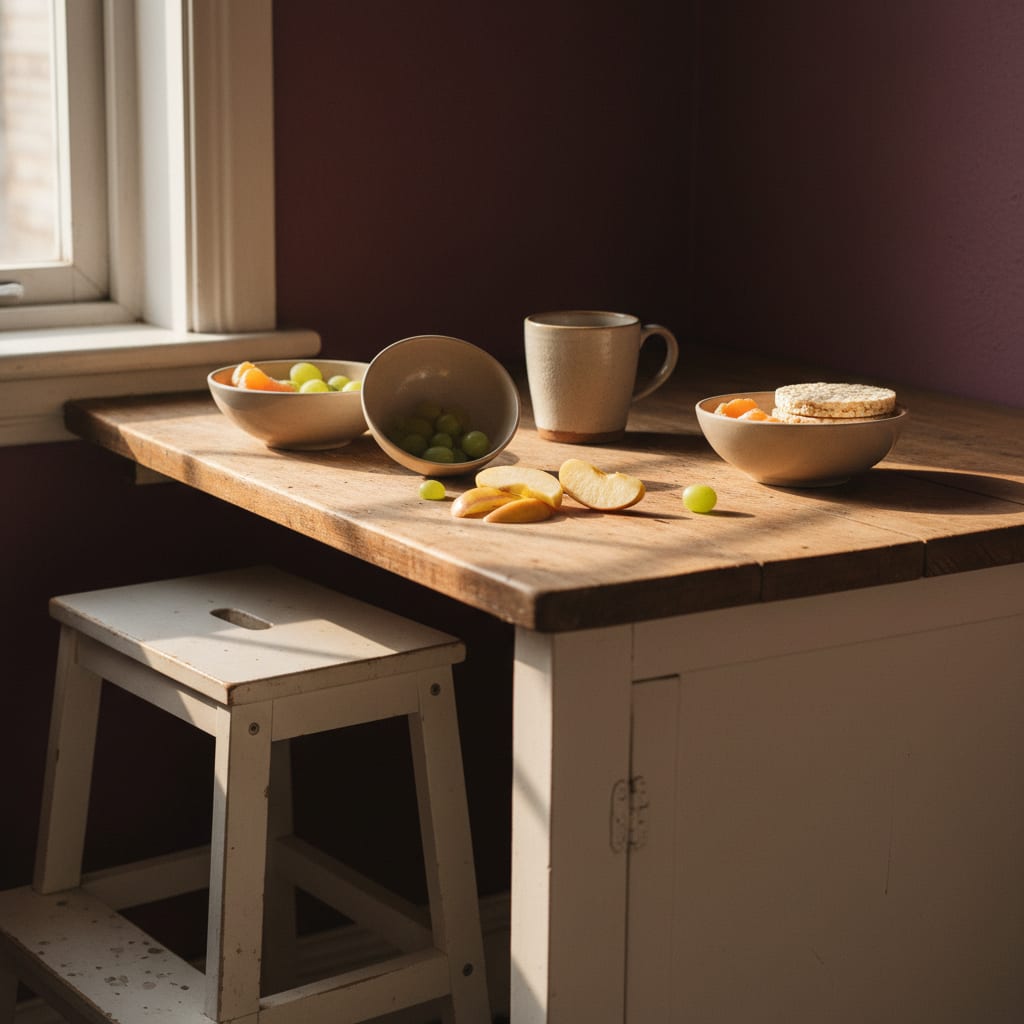
Decision fatigue is the drained, foggy state that builds when you make choice after choice all day, and for mothers at home the choices never stop: which snack, which shoes, whether this nap can be skipped, whether that cry needs you. It isn’t a diagnosis. Cleveland Clinic describes it as “a phenomenon (as opposed to a diagnosable medical condition)” in which the more decisions you make, the more depleted you become. Most of the cure is fewer decisions, not more willpower.
The day is made of decisions nobody counts
Ask a stay-at-home mom what she did today and she’ll struggle to answer, because very little of it looks like anything. A lot of it was deciding.
Can he have the crackers or will that wreck lunch? Is that cough worth a call? Coat or no coat? Is it too late to start the park now? Do I let this fight run or step in? Should she nap in the car or will that cost us bedtime? Each one takes seconds. None of them is hard. There are simply hundreds, and each comes with a small person waiting, often loudly, for the answer.
Cleveland Clinic lists the conditions that make decision fatigue most likely, and the day at home ticks almost every box. You make a lot of decisions. Your decisions affect other people. You are often deciding under uncertainty, because a two-year-old’s moods are not published in advance. And many mothers bring the last one too: “When our standard is perfection for everything,” the psychotherapist it quotes says, “that’s exhausting and depleting for our brain.”
Why it lands hardest on the parent at home
At work, decisions arrive in meetings and inboxes, and somebody else owns half of them. At home, there is usually one decider, and it is you.
That is what makes this different from the mental load. The mental load is the noticing: remembering the dentist, spotting that the shoes are too small. Decision fatigue is the deciding, which comes after. You noticed the shoes. Now which ones, which store, this week or next, and is the budget fine? Both drain you, and they are not the same drain.
There is also no handover. A partner home at six may happily take the children, then ask, “What do they have for dinner?” “Do they need a bath?” “Is he allowed the tablet?” Each is reasonable. Each is another decision delivered to a person who has already made the day’s quota. Being the one who knows is how you end up being the one who decides, which is the default parent problem seen from a slightly different angle.
What it looks like by late afternoon
Cleveland Clinic’s list of signs reads like a description of 5pm at home:
- Avoidance. You put off the call, the form, the menu, because one more choice feels impossible.
- Impulsivity. The takeaway you didn’t plan, the online order you didn’t need, the “fine, have the cookie.”
- Brain fog. You walk into a room and lose the reason, or stop mid-sentence.
- Irritability. Someone asks “what’s for dinner?” and you snap, not at the question but at the hundredth one.
- Regret. Hours later you are still re-running a call you made about a fever or a fall.
It also notes that true decision fatigue is usually short-lived: you should feel better after a day or so of rest. If the fog and indecision are there every day regardless, the clinic says that is worth raising with a healthcare provider, because indecisiveness can also be a sign of burnout, anxiety or depression. The honest check-in is a place to start sorting that out.
How to make fewer decisions
You can’t stop deciding. You can stop deciding the same things again every day, which is most of them.
Decide once, then repeat. Breakfast is the same three options. Tuesday is pasta. The park is after nap, always. A routine is a decision you made once and get to stop making. The systems side of this, how to build the day around anchors, belongs to One Mom’s Guide, whose realistic stay-at-home mom schedule is the place to start.
Lower the standard to “good enough”. The fastest decision is the one where any reasonable answer is acceptable. Not the best snack: a snack. Not the right outfit: clothes. Perfection turns a five-second choice into a five-minute one.
Hand over whole decisions, not just tasks. “Can you do bath?” still leaves you deciding when, how and whether. “Bath and bedtime are yours tonight, however you like” moves the deciding with the task. Then don’t correct his choices, or you’ve taken them back.
Write the evening down once. Bedtime is the worst-timed decision cluster of the day, arriving when you have the least left. A sleep plan built by someone else, like the age-matched plans Betteroo writes, turns “is it too early?” and “should I go back in?” into a page anyone can follow. That is fewer decisions for you, and fewer questions through the door if someone else is doing it.
Move important choices to the morning. Cleveland Clinic cites research suggesting people deliberate more and decide better early in the day. If something matters, a doctor’s call or a money conversation, don’t leave it for 8pm.
Protect a decision-free hour. The clinic’s own advice includes downtime where you don’t have to decide, think about or analyze anything. That is a good description of what rest that actually counts is: an hour in which nobody needs an answer from you.
One small thing this week: pick the single decision you make most often, probably a meal or a snack, and make it once for the whole week tonight. Write it on the fridge. Notice what you do with the space.
FAQ: decision fatigue for moms
What is decision fatigue in parenting?
It’s the mental exhaustion that builds from making many small choices for other people all day. For a parent at home, that means hundreds of minor calls about food, sleep, safety and behavior, with no one to share them.
Is decision fatigue a real condition?
It is a recognized phenomenon, not a diagnosable medical condition. It is usually short-lived and improves with rest. If you feel it every day regardless of rest, mention it to a doctor, since it can overlap with burnout, anxiety or depression.
How do I stop decision fatigue as a stay-at-home mom?
Make fewer fresh decisions: fixed routines and repeat meals, “good enough” standards, handing over whole decisions to a partner, and moving important choices to the morning. Protect at least one stretch of the day where no one needs an answer from you.
Is decision fatigue the same as the mental load?
They are related but different. The mental load is the noticing and remembering. Decision fatigue is the drain of making the choices that follow. Most mothers at home carry both.
Three Good Reads
How to Stop Revenge Bedtime Procrastination as a Mom
How to stop revenge bedtime procrastination as a mom — why you scroll until 1am after the kids sleep, and how to get a real evening back instead.
July 17, 2026
Bored Stay-at-Home Mom: Why It's Not Ingratitude
Bored as a stay-at-home mom? Boredom is an intelligence problem, not a gratitude problem. What the feeling is telling you and what to feed it this week.
August 3, 2026
Who Has It Harder? Escaping the Scorekeeping Trap
Who has it harder, the parent at home or the one at work? Why the marriage scoreboard never settles, what keeping score really means, and how to stop.
July 27, 2026