Is Being a Stay-at-Home Mom Worth It? Asking Mid-Tantrum
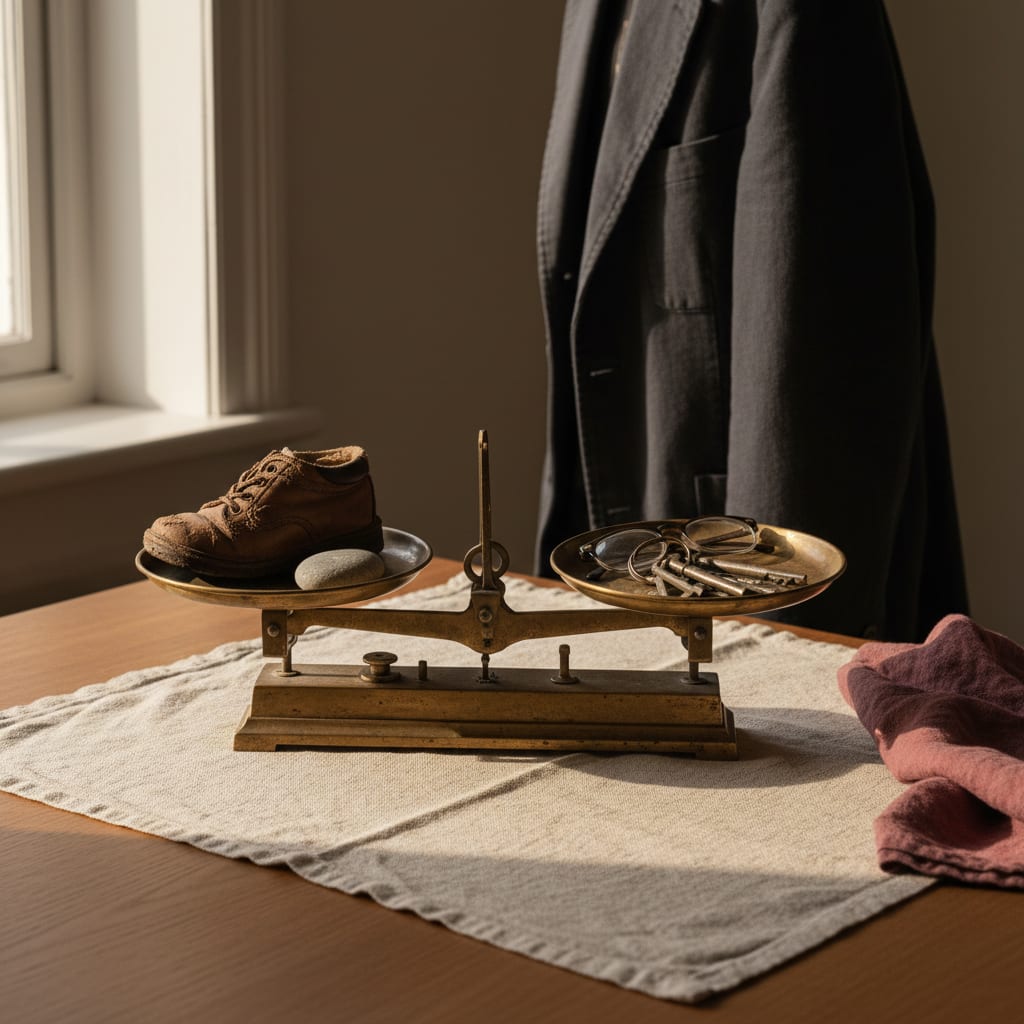
Worth it compared to what — that’s the question hiding inside the question, and it’s why the answer keeps sliding around on you. Most days you are not weighing staying home against a real alternative. You are weighing a bad Tuesday against an imaginary life in which you are paid, respected, and permitted to finish a sentence. Against that, nothing is worth it. Against the actual alternative — which has its own commute, its own guilt, its own 6pm — the ledger reads differently. The honest answer for most women is yes, with conditions, and the conditions are the part that deserves your attention.
Two questions wearing one sentence
When the question arrives mid-tantrum, it is almost never one question. It’s two, fused, and they need separating before either can be answered.
The first is practical: is this arrangement worth its costs for our family, right now? That one has an answer, it changes over time, and it is legitimately reviewable.
The second is the one doing the actual damage: am I worth anything, doing this? That one is not a question about the arrangement at all. It’s a worth question, and it got planted by a culture that measures adults in salary and titles and then acts baffled when a woman doing unpaid work all day struggles to locate her value. Ann Crittenden’s The Price of Motherhood is the book-length version of that observation — that the work of raising children is described as the most important job in the world by people who have arranged the economy to count it as nothing. The policy chapters read dated now, but the central diagnosis hasn’t aged a day, and reading it moves the feeling from what’s wrong with me to oh, this is structural.
You cannot answer question one while question two is screaming. Separate them, then take them in order.
“Is it worth it?” asked at 5:40pm is not a question. It’s a symptom with a question mark on the end.
Why mid-tantrum is the worst possible moment to run the numbers
We do not evaluate our lives from a neutral position. We evaluate them from wherever we happen to be standing, and if you are standing in a hallway holding a shoe while a four-year-old screams about the wrong colour cup, the assessment you produce is not an assessment. It’s a mood with a spreadsheet drawn on it.
Two things are broken in that moment. The comparison is broken, because the life you’re comparing against isn’t a life — it’s a highlight reel of your own past, edited to remove the 7am train and the Sunday-night dread. And the instrument is broken, because depletion doesn’t just make you feel worse, it makes everything read worse. Conclusions reached at the bottom of a bad week arrive with the same confidence as rested ones, which is what makes them dangerous.
So: no verdicts in the hallway. Ask the question whenever it turns up — it will turn up a lot — but only answer it somewhere quiet, more than once, and never on a day when nobody has slept. If the feeling arriving with it is really the flat, gray, nothing-is-worth-anything version, that’s a different signal entirely and it deserves a doctor, not a ledger. Postpartum Support International is on 1-800-944-4773 for mothers at any stage; 988 is there for a crisis.
What actually goes on the ledger
When you do sit down with it, the accounting is broader than the one everybody runs, which is usually just childcare costs versus salary. That half belongs on a spreadsheet, built properly rather than estimated in your head. But the columns that decide how this actually feels are these.
Real costs, said plainly. Income now and retirement contributions later. Career momentum, which compounds in both directions. The professional identity that used to answer “what do you do.” Adult company, which the job removes almost entirely. And a specific, underrated one: the loss of any external signal that you did well today.
Real gains, said equally plainly. You are the one who is there — for the bad dream, the strange mood, the sentence they tried three times to say. The logistics load drops enormously; there is no 4:50pm sprint against a nursery’s closing time. You keep custody of your own day’s shape, which is not nothing after years of someone else owning it. And there’s the thing that resists line-item form: you know these people at a resolution that is only available up close, and that access has a closing date.
The costs that are actually conditions, not costs. Here’s where the ledger usually gets misread. Isolation, understimulation and no time off are the three that make women conclude the arrangement isn’t worth it — and all three are conditions of how it’s being done rather than facts about staying home. A week that contains no adult conversation and no thinking is not staying home; it’s staying home badly, and it’s fixable without changing the arrangement at all. That’s the whole reason boredom deserves its own diagnosis rather than being folded into the verdict. Fix the conditions, then re-run the question, because the answer moves.
When the answer is honestly no
Sometimes it is no, and this magazine is not in the business of talking anyone out of that.
The shape of a real no is: you fixed the conditions and the answer didn’t move. You have adult contact, something that engages your mind, actual time off — and it’s still no. It has been no for months rather than for a season. And it’s paired with a pull toward something specific, not just away from this.
That’s a decision, and decisions are made deliberately, with numbers and a partner and a timeline, rather than announced at the end of a bad week. If that’s where you are, the people who write well about the mechanics of that call are thenewstayathomemom’s deciding framework — the same framework works in reverse, for un-deciding. Nothing here is permanent. Arrangements get renegotiated constantly by ordinary people, and their children are demonstrably fine.
It’s worth saying too that “worth it” and “I love it” are not the same measurement. You can find the trade sound and still hate the job on a Tuesday, and the presence of hatred is not evidence against the arrangement. Nor is the presence of guilt, which shows up regardless of what you choose and would have followed you to the office.
One small thing this week: write the question down properly — is this worth it compared to what, exactly — and fill in the “what” with the real alternative, in detail, hours and all. Most of the time the question quietly answers itself the moment the comparison stops being imaginary.
FAQ: is being a stay-at-home mom worth it
Is being a stay-at-home mom worth it financially?
That depends entirely on your household, and it’s a genuine calculation rather than a feeling — childcare costs, commuting, taxes, and the long tail of lost retirement contributions and career progression all belong in it. Build it properly on paper with your partner. What it will not tell you is whether the arrangement suits you, which is the other half of the question.
How do I know if staying home is still working for our family?
Look for whether the answer holds outside the bad hours. If you’d say yes on an ordinary Sunday and no only at 5:40pm on a Thursday, the arrangement is probably fine and the conditions need work. If it’s no on the good days too, and has been for months, that’s information about the arrangement itself.
Is it normal to regret being a stay-at-home mom?
Passing regret is close to universal and says very little; most people in most jobs feel it. Sustained regret that survives a fixed schedule, real time off and adult company is different, and it’s worth taking seriously rather than enduring quietly. Either way it doesn’t make you ungrateful — it makes you someone honestly reviewing a hard arrangement.
Should I go back to work if I’m asking whether it’s worth it?
Not on the strength of the question alone, since the question visits nearly everyone. Weigh it when you’re rested, more than once, and against the real alternative rather than a fantasy of your former life. If the answer stays no across months and good days, then it’s a decision to make deliberately, with numbers, together.
Three Good Reads

The Default Parent: Why It's Always You
What a default parent is, why it's probably you, and how to rebalance — from the school's first phone call to the 2am wake-ups that only ever find your side.
July 17, 2026

Who Has It Harder? Escaping the Scorekeeping Trap
Who has it harder, the parent at home or the one at work? Why the marriage scoreboard never settles, what keeping score really means, and how to stop.
July 27, 2026
Sunday Scaries as a Stay-at-Home Mom (Yes, Still)
Sunday night dread when you don't go to work on Monday is real and it has a cause — the shift change nobody counts. What it is, and what makes Sunday easier.
August 15, 2026