Bedtime Tantrums: How to Ride Out a Lights-Out Meltdown
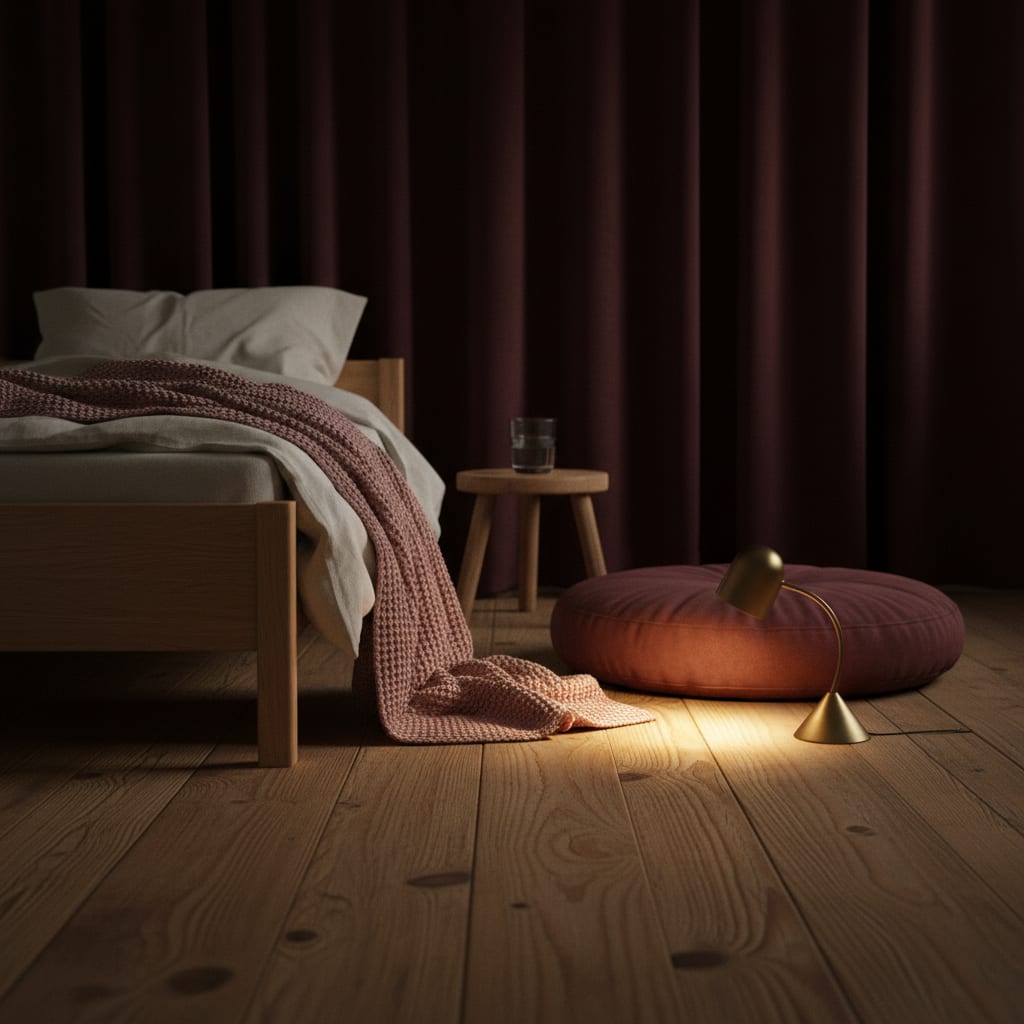
A bedtime tantrum at lights-out is usually a tired small child running out of the ability to cope at the exact moment the day asks the most of them: the play ends, the light goes, and you leave. It is normal, and it peaks between ages one and three. Riding it out is less about technique than about steadiness: stay close, keep your voice low and your words few, keep them safe, hold the one thing that isn’t changing, and comfort them the moment it breaks. Then look at the timing tomorrow, not tonight.
Why it breaks at lights-out, of all moments
Nemours’ KidsHealth lists the conditions first: “Tantrums may happen when kids are tired, hungry, or uncomfortable.” The AAP’s HealthyChildren site calls tantrums “a normal part of development” that “happen most between ages 1 and 3 years.” Bedtime adds three hard things to tiredness at once: a transition, a separation, and the end of whatever they were enjoying.
Zero to Three adds the part worth remembering at 7:40: a toddler’s brain “lacks the ability to ‘put on the brakes,’” and even a child who can recite a rule doesn’t have the impulse control to act on it until about three and a half to four. So the meltdown at the light switch is not defiance you failed to train out. It is a nervous system at the end of its range, meeting a limit it cannot yet hold by itself.
It is also not the same as two neighbours. A child cheerfully asking for one more book is negotiating, and that has its own fix. A child frantic and wired by six is probably overtired, and reading which one you have changes tomorrow’s plan. The lights-out tantrum is the sudden storm at the end: fine at the bath, gone at the switch.
Why it lands so hard on you
Zero to Three says tantrums “can have surprising emotional impact—knocking grown-ups off balance in the moment,” and bedtime is when you have the least balance left. It is the end of a shift with no handover, and the meltdown stands between you and the only hour that belongs to you. That turns a child’s distress into something that feels personal: a verdict on the day, a fine on the evening.
That is resentment, and it’s information. It doesn’t mean you are doing bedtime wrong. It means the hour costs you more than anyone sees, which is also why the anger that rises in you at 7:45 is so much bigger than the anger the same scream would raise at 10am.
Riding it out: what helps in the room
Decide the fixed point before you start. One thing does not move tonight, usually that the light is off and bedtime is happening. Everything else can bend: which animal, the door ajar, where you sit. Zero to Three calls this “choosing your battles”; at bedtime it means choosing one, before anyone is crying.
Be the steady thing in the room. “When a child is having a hard time, she needs you to be her rock,” Zero to Three says. KidsHealth puts it more bluntly: “Remind yourself that your job is helping your child learn to calm down. So you need to be calm too.” Sit down, low and close, and leave the lamp where it was.
Say one sentence, then mostly stop talking. Zero to Three advises setting the limit “with as little emotion (and as few words) as possible,” in a low, steady voice. Name the feeling, hold the line, stay: you wanted the light on. The light is off. I’m right here.
Wait it out rather than trying to stop it. You “can’t actually make children calm down,” Zero to Three points out; you can only make it easier for them to come back. Its suggested script suits a dark bedroom: “I will be here by your side and wait for you to calm.”
Keep everyone safe, including from you. HealthyChildren says not to ignore hitting, kicking or biting, so move them or yourself. If your own voice is going hard, Zero to Three suggests a parent “time-out” with your child somewhere safe. A minute on the landing beats staying and snapping.
About giving in. KidsHealth is clear that giving in teaches that the tantrum worked. HealthyChildren is more honest about real evenings: “Sometimes you have to give in a little to settle yourself; that’s OK. However, your consistency from day to day is key.” Both are true. The hall light left on one night because you had nothing left undoes nothing. Every night, it will.
When it breaks: comfort, then the short version
Many of these end abruptly, with a hiccuping child who suddenly wants to be held. KidsHealth says this is the time “for a hug and reassurance that your child is loved, no matter what.” Then finish bedtime in its shortest form: the last line of the song, the same goodnight, out. Don’t restart the routine and don’t hold the talk about it now; a child old enough to discuss it will do better in daylight.
Then there is you, downstairs and wrung out, with an evening that now starts at 8:20. Some nights the kindest thing is to call that hour lost and go to bed early.
Tomorrow: if it happens every night
One meltdown is weather. Most nights is a pattern, and it usually points to timing. KidsHealth says that with too little sleep kids can have “extremes in behavior,” and that enough sleep “can greatly reduce tantrums.” A bedtime that has drifted later, a nap that runs long, or a stretch of fighting bedtime around two (which Betteroo describes as more about growing independence than a change in sleep itself) can all make the light switch a nightly trigger. If the hours before bed are their own disaster, the 5-to-7 stretch is where to look first.

For the longer run, Daniel Siegel and Tina Payne Bryson’s No-Drama Discipline is built around connecting with an upset child before trying to teach them anything. Read it on a calm afternoon, not after a hard night.
When to talk to the pediatrician
HealthyChildren notes that tantrums “do tend to get better after the age of 3,” and KidsHealth says they “usually aren’t cause for concern.” Its list of reasons to talk to your doctor is worth reading, because it starts with you:
- you often feel angry or out of control when you respond to tantrums;
- you keep giving in to avoid your child acting out;
- the tantrums cause a lot of bad feelings between you and your child, or you and your partner;
- they happen more often, are more intense, or last longer;
- your child often hurts themselves or others.
The doctor can also check for things that make tantrums more likely, such as hearing or vision problems or language delays, though KidsHealth says this is not common. If your own anger is frightening you, say so to your own doctor too, and if you ever have thoughts of harming yourself or your child, the 988 Suicide & Crisis Lifeline (call 988) is free, confidential and open around the clock.
Quotes here are from KidsHealth, HealthyChildren and Zero to Three pages read on 2026-10-19; anything about your particular child belongs with their pediatrician.
One small thing this week: choose tonight’s fixed point and your one sentence while it’s still light out, and use the same sentence every night for a week.
FAQ: bedtime tantrums
Is it normal for a toddler to have a tantrum at bedtime?
Yes. Tantrums are most common between ages one and three and most likely when children are tired, which is exactly how bedtime finds them. Most nights points to timing.
Should I stay in the room during a bedtime tantrum?
Usually, yes: close, calm and quiet helps a small child come back faster. If you are losing your temper, a short break with your child safe beats staying and shouting.
When are bedtime tantrums a concern?
When they are getting more frequent, more intense or longer, when your child often hurts themselves or others, or when you often feel angry or out of control responding. Raise any of those with your pediatrician.
Three Good Reads
How to Stop Revenge Bedtime Procrastination as a Mom
How to stop revenge bedtime procrastination as a mom — why you scroll until 1am after the kids sleep, and how to get a real evening back instead.
July 17, 2026

How to Stop Comparing Yourself to Other Moms
Comparing yourself to other moms rarely tells you anything true. Why the feed hits harder when you're home all day, and how to stop scoring your life by it.
October 11, 2026

Holiday Burnout: Who Actually Does Christmas at Your House?
Holiday burnout is rarely about too many parties. It's about one person producing the magic for everyone else. How to see it, and what to hand over this year.
October 7, 2026