The Joy Nobody Photographs
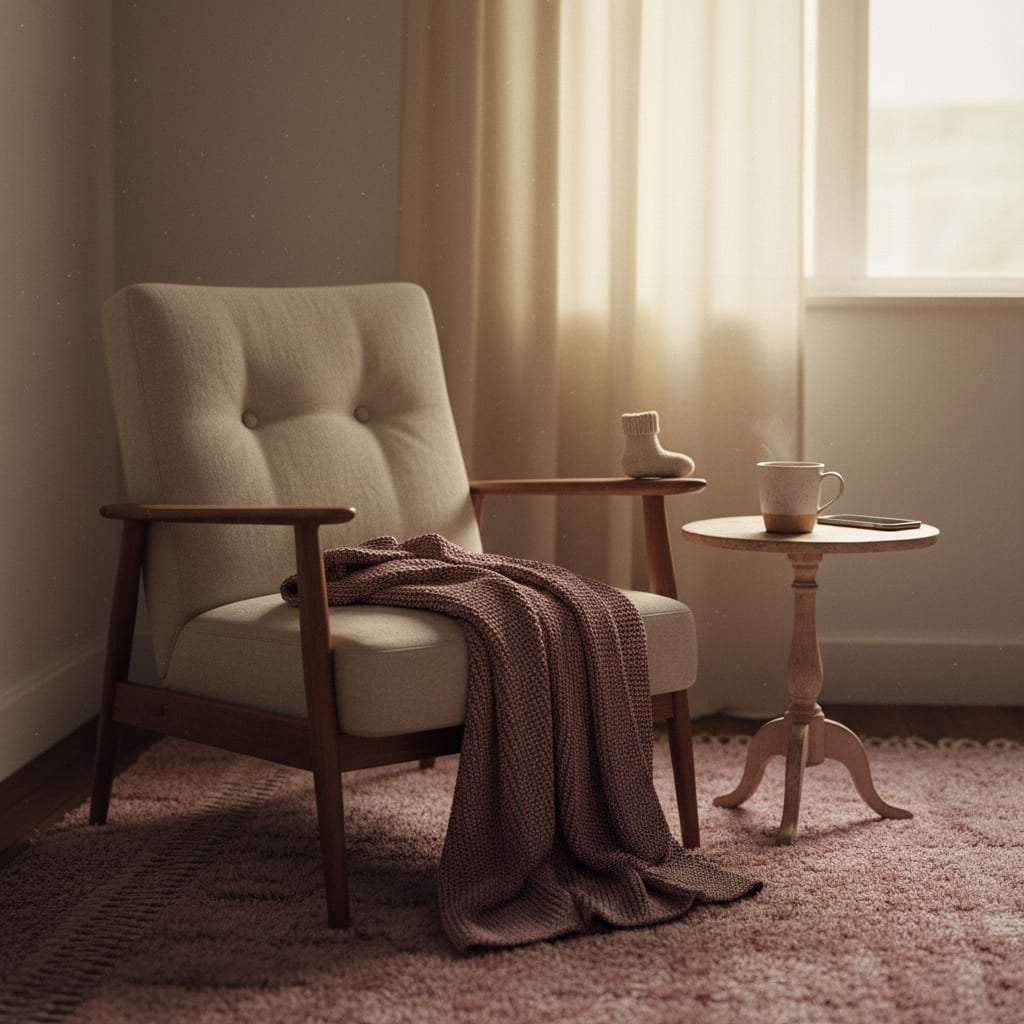
The joys that make this arrangement worth having are, almost without exception, the ones that leave no evidence. Nobody photographs them because they cannot be photographed: they are too small, too internal, or already over by the time you’d have reached for a phone. Which means the record you’re building of these years — the beach, the birthday, the first day of school — is a record of the occasions, not of the life. That gap is worth knowing about, because it’s part of why the years can feel simultaneously precious and unaccounted for, and why the highlight reel makes such poor evidence about anyone’s happiness, including your own.
What the camera comes out for
The camera comes out for milestones and for anomalies. Anything that happens on a Tuesday is invisible to it by definition, because we photograph what is unusual — and the texture of staying home is, structurally, the usual.
So look at what the archive actually contains. Birthdays. Holidays. First steps, first haircut, first day. Costumes. A sunlit meal on the one day the light was good. It is a real record of real happiness and I’m not sneering at any of it. But run the ratio: perhaps forty occasions a year, against roughly three hundred and sixty-five days you were actually there for. The archive covers around ten per cent of the life, and it has selected that ten per cent on the single criterion of photogenic.
Then we go back and read the archive as though it were the life. That’s the trap. We look at the pictures and conclude the good bits were the beach and the birthday, and everything in between was logistics — which quietly confirms the suspicion that most of these years are being spent rather than lived. It isn’t true. It’s just what a camera can hold.
The archive isn’t dishonest. It’s just aimed at the wrong ten per cent.
The ones that never make it in
Try naming them and you’ll notice they resist the attempt, which is itself the point.
The weight of a child asleep on you, and the specific relief in it — the only situation in modern life in which doing absolutely nothing is unambiguously the correct action.
The moment a two-year-old says something that turns out to be a whole thought, arriving in a sentence they’ve clearly been assembling privately for days.
Sitting on the kitchen floor at 3pm while somebody narrates an elaborate story about a dog to you, and being, for four minutes, entirely present and not bored.
The first sound of the day: the door, the feet, the reliable outrage about socks.
Watching one of them be kind to the other when nobody is supposed to be looking, which is the closest thing to a performance review this job offers.
The unglamorous animal comfort of a small warm hand taking yours in a car park for no reason at all.
None of these will photograph. Some are too brief; some are entirely interior, existing only in you; some collapse the instant you introduce a lens, because the child sees the phone and starts performing and the real thing evaporates. You cannot document the sensation of a sleeping child’s weight. You can only be under it.
Why noticing beats capturing
There’s a version of this essay that ends with be present! and I refuse to write it, because “be present” is the least actionable sentence in parenting and it’s usually deployed to make tired women feel worse. Here’s the more useful shape.
Capturing and noticing are different actions, and they compete for the same second. Reaching for the phone converts an experience into a task — frame it, get it, check it — and the four seconds that go into acquiring the record are taken directly out of the thing being recorded. Everyone knows this and everyone does it anyway, because the record feels like insurance against forgetting. It isn’t much of one. The pictures preserve what the pictures show; they do not preserve the sensation, which is the part you actually want back.
Noticing costs nothing and takes no hands. It’s just the internal act of registering, at the time, this is one of the good ones — a half-second of attention paid deliberately rather than automatically. Do it a few times a week and something changes about how the years read from the inside. Not because you’ll remember more, though you will, but because the good bits stop being invisible to you while they’re happening. Most of them are currently passing unlogged, not because the days lack them but because nothing marks them and the mind files unmarked things as nothing at all.
This is also the honest answer to the days that blur into one. The sameness is real; the emptiness isn’t. What’s missing from a blurred week is rarely events — it’s marked moments, and marking is free.
The joy is not the argument
One caution, because this magazine doesn’t do consolation prizes.
The unphotographed joys are real, and they are not a rebuttal to anything hard. They do not cancel the boredom, they do not settle whether the arrangement is worth it, and they are not the reason you should stop complaining. Anyone who deploys “but the moments!” against a woman describing genuine difficulty is not offering perspective, they’re asking her to be quiet. Both columns exist. The joy sits in one of them and does not reach across.
What it does do is answer a smaller, sharper question — the one that shows up at 11pm on the days that felt like nothing: was any of that good? Usually, yes. Roughly six times, and you were there for all of them, and nobody took a picture. That’s not a failure of the day. It’s what the good parts of this look like.
Jennifer Senior’s All Joy and No Fun is the most rigorous book I know on exactly this split — that parenting reliably scores high on meaning and low on moment-to-moment enjoyment, and that most of the confusion around modern parenthood lives in the gap between those two measurements. It’s reported rather than confessional, and it will not comfort you, which I mean as praise. Its weakness is that it observes more than it prescribes; you finish it better informed rather than better equipped. But it does the thing that matters most here: it stops you concluding that a day which wasn’t fun therefore wasn’t good.
One small thing this week: when one of them happens — and one will, probably tomorrow — don’t reach for the phone. Say the sentence this is one of the good ones silently, and stay where you are. That’s the whole practice, and it’s the only archive that keeps the part you’d actually want back.
FAQ: the joys nobody photographs
Why do the best parts of motherhood never get photographed?
Because cameras record occasions and the best parts are mostly texture — brief, interior, or ruined by the presence of a lens. We photograph the unusual, while the substance of daily life with small children is by definition the usual. The archive ends up covering a small, photogenic fraction of the actual life.
Am I failing if I don’t feel joy every day?
No. Meaning and enjoyment are separate measurements, and this job scores far higher on the first than the second. A day can be genuinely worthwhile and not remotely fun, and expecting daily joy from an arrangement that mostly delivers daily meaning sets up a failure that was never yours.
How do I stop the years feeling like they blurred past?
Mark things rather than capture them. A deliberate half-second of this is one of the good ones, a few times a week, does more for how a year reads later than a full camera roll — because the mind files unmarked moments as nothing, and most good ones currently go unmarked.
Should I take fewer photographs of my kids?
Not fewer, necessarily — just fewer taken instead of noticing. Photographs preserve what they show and not the sensation you actually want back, and the seconds spent acquiring the shot come straight out of the moment. Keep the camera for the occasions and let the ordinary ones stay unrecorded.
Three Good Reads
Sleep When the Baby Sleeps: Why It Fails and What Helps
Sleep when the baby sleeps is the advice every new parent hears. Why it fails at home with a toddler too, and three things that actually help you bank sleep.
September 27, 2026
Making Friends as a SAHM (No Coworkers, No Problem)
How to make friends as a stay-at-home mom with no office to meet people in — where SAHM friendships actually start, and how to make the first move this week.
July 19, 2026
Stay-at-Home Mom Resentment: When He Gets to Leave
Resenting your partner for leaving the house every morning is common and rarely about him. What the 8am resentment is actually pointing at, and what lowers it.
August 15, 2026