Toddler Wakes Up From Nap Screaming: What's Going On
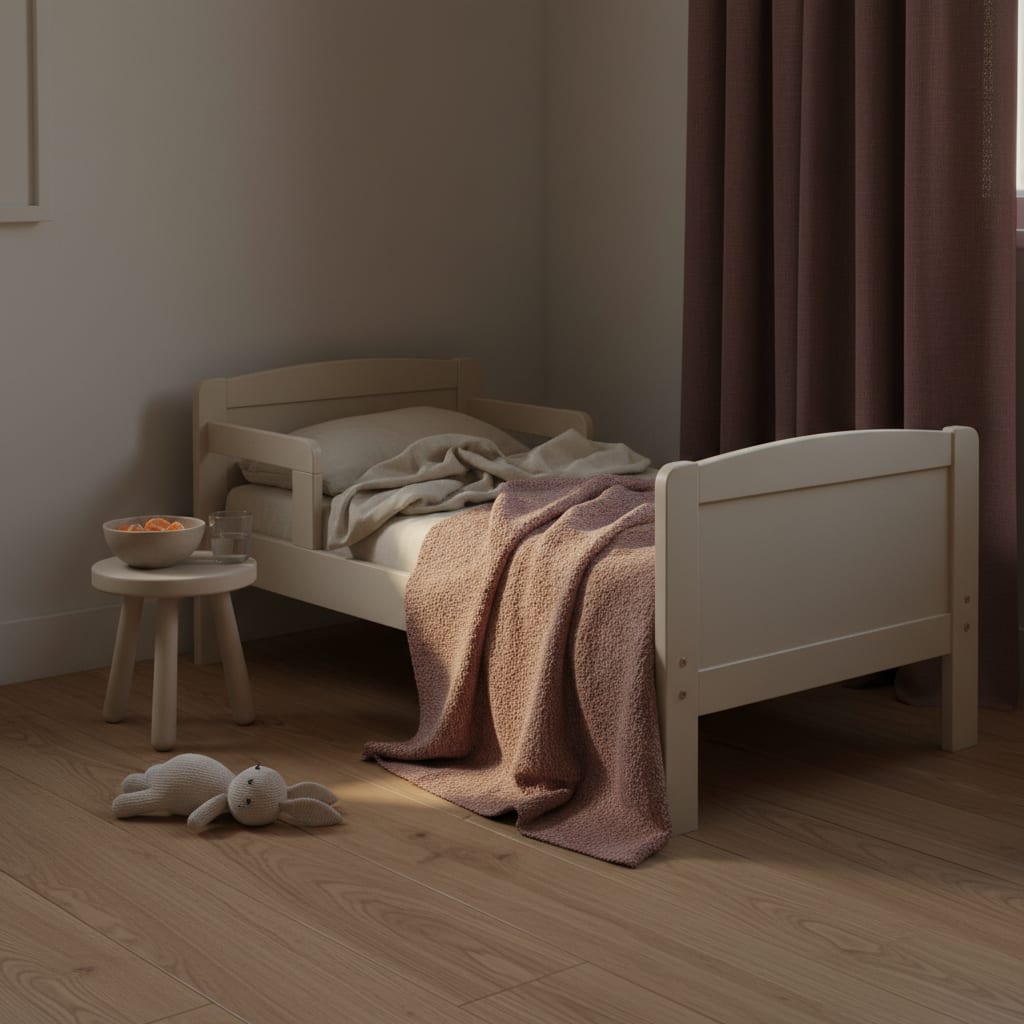
When a toddler wakes up from every nap screaming, the usual cause is a hard landing, not a problem: a nap that ended mid-cycle or too soon, the groggy state sleep researchers call sleep inertia, hunger, or a child who was overtired going down. It is rarely a night terror, which KidsHealth places a couple of hours into night sleep. What helps is a slow wake-up: dim light, no questions, a snack waiting, and ten minutes before anyone asks for anything. Check with your pediatrician if it comes with signs of illness or the patterns listed below.
Why it lands so hard on you
The nap is your shift break. For an hour or two, nobody needs anything, and you get to be a person who finishes a cup of tea. Then the monitor erupts, and the break doesn’t just end. It ends in a scream that can run for twenty minutes, with a child who arches away from you, wants the cup and then throws it, and cannot be reasoned with.
Do that every day and the break stops feeling like a break. You spend the last half hour of it bracing. You stop starting anything you can’t drop. The afternoon that follows starts in the red, and by 5pm both of you are frayed.
It also feels personal. You go in with your gentlest voice and get screamed at. Mostly it isn’t about you. It is a small brain that hasn’t finished waking up.
The usual reasons a nap ends in tears
The nap ended between cycles, and not by choice. Sleep runs in cycles, and between them, as Betteroo’s guide on why naps so often stop at the cycle change puts it, “everyone surfaces to a light, near awake state”. A child who surfaces and can’t drift back down wakes up short and cross. That guide is written about babies, but the pattern of a nap that ends early and grumpy is familiar to plenty of toddler parents too.
They were still deep asleep. The groggy, disoriented stretch after waking has a name: sleep inertia. A review of the research describes it as “the temporary time of sleepiness, disorientation and impaired cognitive performance experienced upon awakening”, and notes it tends to be worse after longer naps and after prior sleep loss. That research is in adults, but every adult knows the feeling, and a toddler has no words for it except volume.
They were woken. A door, a delivery, a sibling, or you, capping a long nap. Being pulled out of deep sleep by someone else is the hardest kind of waking, at any age. If you are capping naps, waking them gently and in light sleep is covered in when to wake a toddler from a nap.
They are hungry or thirsty. Lunch was hours ago. Small children rarely wake and say “I’m hungry.” They wake and cry, and the cry is louder when the tank is empty.
They went down overtired. A child who crashed into the nap after a long morning tends to sleep more fitfully and wake harder. The signs that a toddler is overtired rather than undertired are easy to mix up, and overtired vs undertired sets them side by side.
Nap screaming or a night terror?
KidsHealth, the Nemours parent site, describes a night terror as a child who “wakes up screaming and is impossible to comfort”, who doesn’t seem aware anyone is there, and who usually won’t remember it. It says night terrors “usually happen about 2–3 hours after a child falls asleep”, during deep non-REM sleep, when the child partly wakes. The NHS adds that during a night terror the child has their eyes open but is not awake, that episodes happen early in the night and can last up to 15 minutes, and that they are most common between the ages of 3 and 8.
So the textbook night terror is a night-time event. The typical post-nap meltdown is different in one way that matters: your child is awake. They know you, they want something (held, put down, the other cup), and they come round over minutes as the fog lifts.
If instead your child screams with eyes open but seems not to see you, then goes back to sleep and remembers nothing, describe that to your pediatrician whatever time of day it happens. Both sources give the same advice for a real night terror: keep them safe and don’t try to wake them. Our piece on night noises in small children covers the night-time version in more detail.
The slow wake-up routine
You can’t stop every hard landing. You can make the landing strip softer.
- Go in slowly, and stay low. Sit near the bed or on the floor rather than scooping them up at once. Some children want holding straight away. Many want a minute to arrive first.
- Keep the room dim. Open the curtains gradually, a few minutes in, not on entry.
- Ask nothing. No “do you want to go to the park?” and no choices between two snacks. A child in the fog can’t decide, and being asked makes it worse.
- Have food and water already out. A snack and a cup on a low table, offered without fuss. Often this does more than any amount of soothing.
- Give it ten minutes before any demands. No shoes, no car seat, no “we’re late”. Plan outings for half an hour after the usual wake time, not at it.
If the screaming comes after short naps most days, look at timing. Earlier bedtime after a short-nap day, a darker room and adjusting the awake time before the nap are the usual levers, and Betteroo keeps a longer list of causes and fixes.
Protecting your own end of the nap
The other half of this is you. If the nap always ends in a storm, stop spending its last twenty minutes on something you’ll resent being torn away from. Put the hard task at the start of the nap, and keep the end for something you can drop mid-sentence: a podcast, a pot of tea, sitting still.

A balanced word: no plan guarantees a cheerful wake-up, and some children are simply slow to come round from sleep for a few years. A plan helps with the part you can change, the timing.
When to ask a doctor
Most post-nap screaming is a hard wake-up and fades with time. KidsHealth suggests talking to your doctor about night terrors if they last longer than 30 minutes, happen more than once a week, or stop your child getting enough sleep; if your child seems very sad, fearful or stressed during the day; if there is drooling, stiffening or jerking during an episode; or if your child snores, has heartburn or burps a lot. The NHS suggests seeing a doctor if night terrors start after age 5. And if the screaming comes with signs your child is unwell or in pain, or is very unlike them, call as you would at any other time.
One small thing this week: tomorrow, put a snack and a cup on a low table before the nap ends, and sit on the floor when you go in. Say nothing for the first minute. See what changes.
FAQ: toddler waking from naps screaming
Why does my toddler wake up from naps screaming?
Usually because the nap ended hard: between sleep cycles, out of deep sleep, after being woken, or with a hungry or overtired child. The groggy state after waking, sleep inertia, makes it hard for small children to come round calmly.
Is my toddler having a night terror during naps?
Usually not. KidsHealth says night terrors typically happen 2 to 3 hours after falling asleep at night. A child who knows you and wants comfort after a nap is awake. If your child seems unaware of you and remembers nothing, mention it to your pediatrician.
Should I change the nap if my toddler always wakes up crying?
Possibly. Short naps can mean the timing or room needs adjusting, and very long naps may mean waking them gently at a set time. Change one thing at a time and give it a week.
Three Good Reads
How to Stop Revenge Bedtime Procrastination as a Mom
How to stop revenge bedtime procrastination as a mom — why you scroll until 1am after the kids sleep, and how to get a real evening back instead.
July 17, 2026
When You Hate Being a SAHM (and Love Your Kids)
If you've typed 'I hate being a stay-at-home mom' into a search bar, this is the judgment-free essay — both things can be true, and neither makes you bad.
July 17, 2026

Doing Things Alone as a Mom Is a Skill (Learn It)
Doing things alone as a mom is a skill you lost through disuse, not a personality trait. Why solo outings feel so strange, and how to rebuild the muscle.
August 3, 2026